At a glance
- The work
- Backyard renovation around a retained ficus, kitchen, decks and planting
- The palette
- Cedar, concrete and steel
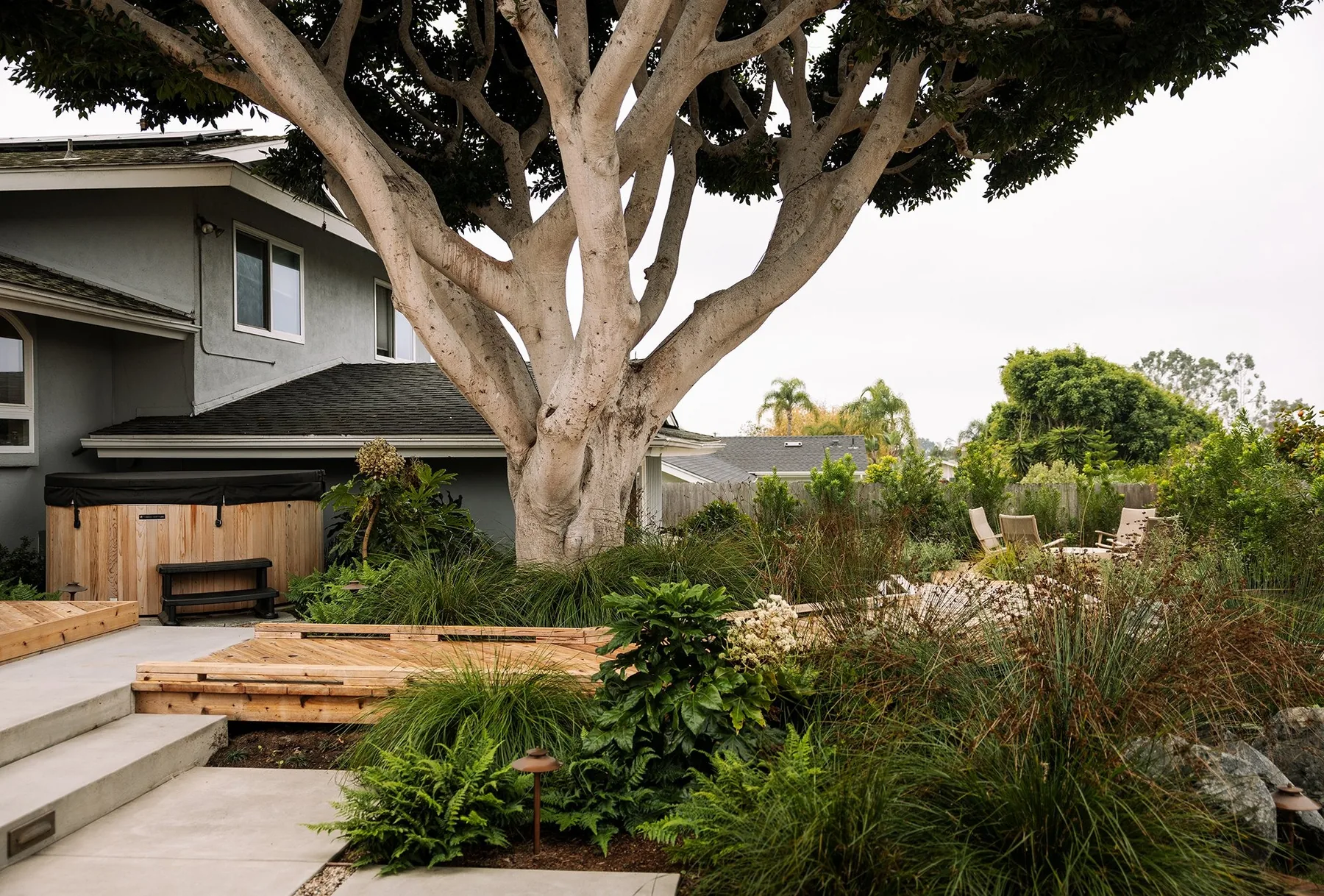
The ficus was already the largest presence in the yard. Around seventy years old, it had sheltered a treehouse and stood within an aging deck. When Adrian and Jessica asked Falling Waters Landscape to remake the garden of their split-level Carlsbad home, keeping that tree became the decision around which the rest of the work turned.
The old deck was termite-damaged and the outdoor spaces poorly defined. The family wanted places to play, relax and entertain, including a shaded kitchen with generous counter space. The yard also changed elevation by about six feet. A flat terrace across the whole site would have missed both its character and its constraints.
Following the tree
Cedar decking, concrete steps and a footbridge connect the different levels. The route bends around the ficus, narrowing in places and opening into small platforms. Falling Waters designed the hardscape and bridge to limit their impact on the tree's surface roots.
In the finished photographs, the trunk stays visible from several directions. The garden does not conceal it behind a raised planter or push the seating to the perimeter. Instead, changes in height let people occupy different parts of its surroundings: beside the trunk, beyond the foliage or on a small terrace looking back through the planting.
Shelter in two forms
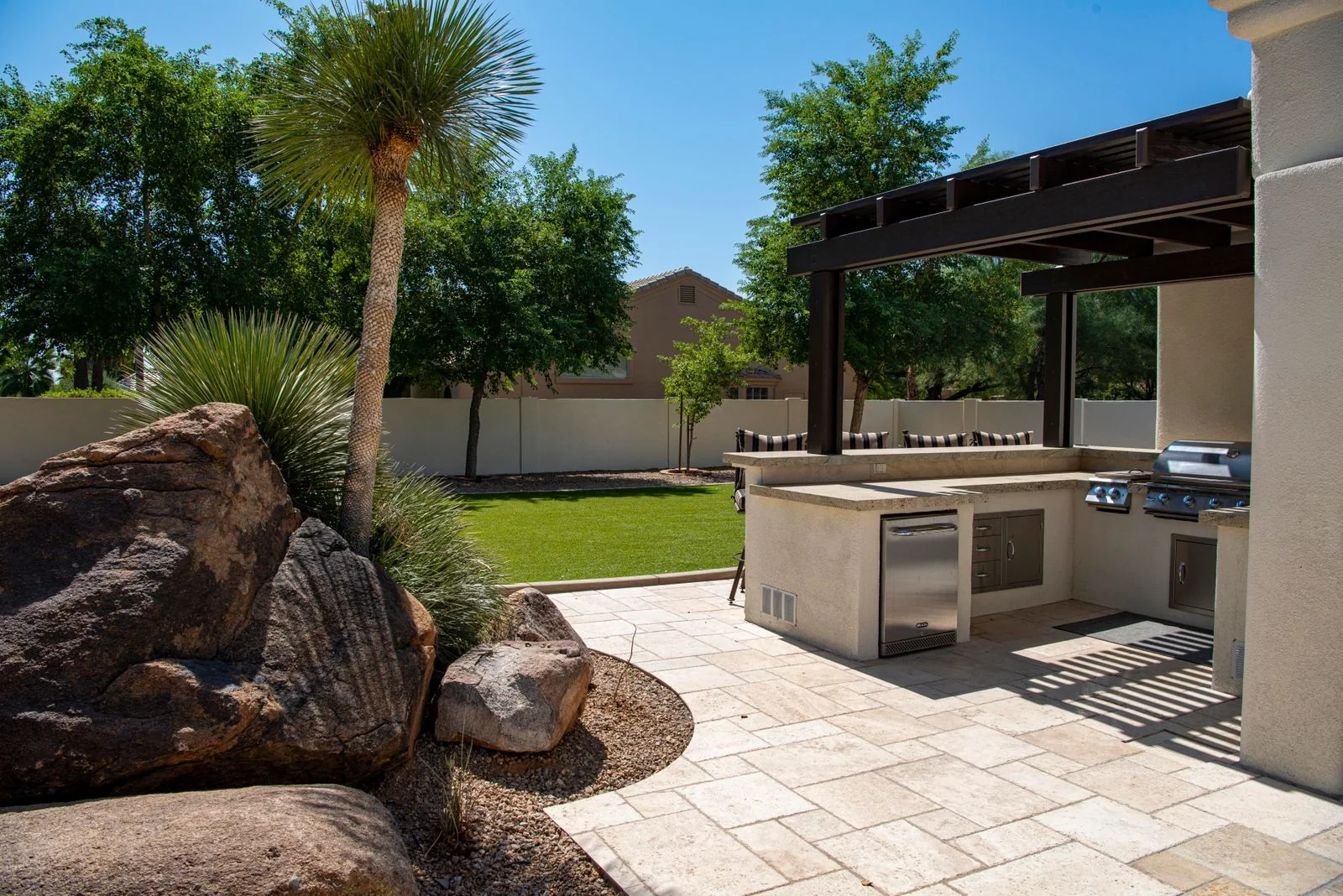
The outdoor kitchen has a steel overhead structure, giving the cooking and dining area a roof of its own. That makes it a distinct room while the tree supplies the larger canopy across the garden. Timber, pale concrete and darker metal repeat without making every surface match.
The planting includes fatsia, lace fern, carex and other species selected for the wooded, shade-loving palette. Large leaves sit close to paths; finer foliage softens the changes in level. The combination keeps the construction from becoming the only thing seen between one destination and the next.
The before photograph makes the transformation clear. The same tree remains, but the deck no longer occupies the yard as one broad surface. Several smaller places now gather around it, giving a familiar feature of the property a new role in daily life.
At home
An existing tree can determine the route and the rooms of a garden, rather than becoming an obstacle to remove.