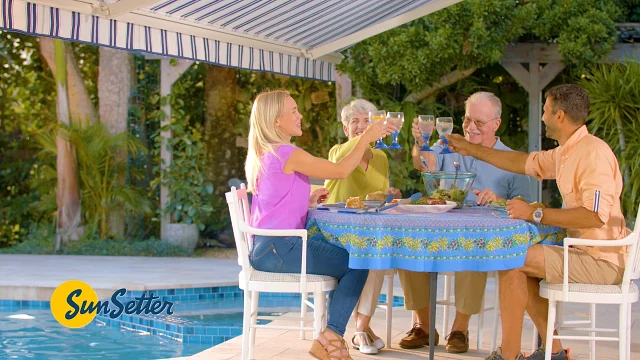
A retractable awning can give a patio two distinct characters: sheltered for a bright afternoon and open to the sky when the sun has moved. SunSetter's motorized lateral-arm awning makes that change from a control. Its usefulness depends on where the shade lands, how the assembly meets the house, and whether retracting it becomes an ordinary part of using the room.
Map the afternoon, not only the canopy
Mark the occupied seats at the time the patio is most uncomfortable. The awning's projection is not the same thing as its shaded footprint throughout the day; low sunlight can reach beneath an overhead cover. A wider fabric canopy may still leave the critical chair exposed if the sun arrives from the side.
Photograph the patio at those hours and bring the images to the supplier. Compare the proposed awning with the table and chairs in position. If the main problem is low western sun, discuss whether a different seating location or a suitable vertical shade would solve more of the problem than a larger awning alone.
Read the house elevation
Locate the mounting line, doors, windows, lights, downspouts, and roof overhang on one drawing. The awning needs a suitable structural attachment and enough operating space; the cladding visible from outside does not by itself establish either.
Have the installer explain the attachment and weatherproofing for the actual wall construction. Include electrical work and the route to the power supply in the quote. Look at the folded assembly from inside the house as well. It remains part of the elevation when the canopy is closed, and its position can affect an important view.
Choose fabric in the light it will create
SunSetter offers woven acrylic and laminated fabric options for this range. Their characteristics and care instructions differ, so record the exact fabric with the model and frame finish. Do not rely on a color name alone when comparing proposals.
Hold a sample against the siding and look through it toward daylight. A striped canopy can bring a deliberate rhythm to a plain facade; a quiet solid may suit a garden already rich in pattern. Remember that the fabric is seen from below at close range. Its effect on the room matters as much as its appearance in a photograph taken from the lawn.
Practice the closing routine
Ask for a demonstration of normal operation and the model's manual override. Learn the manufacturer's limits for wind, rain, and unattended use. An optional sensor does not remove the owner's responsibility to follow the operating instructions or make a retractable awning equivalent to a permanent roof.
Locate the controls where the person using the patio can reach them conveniently, and agree on who closes the awning when the household leaves. Resolve seasonal cleaning and storage instructions before the first winter. Ease of operation has value only when it supports a routine the household will actually follow.
Compare shelter on the same terms
If you expect to leave the canopy extended almost all the time, compare the installed price with a fixed shelter. The awning's particular pleasure is being able to uncover the patio when the sun has moved. That change should be easy to make, with the controls close at hand and the operating limits understood.