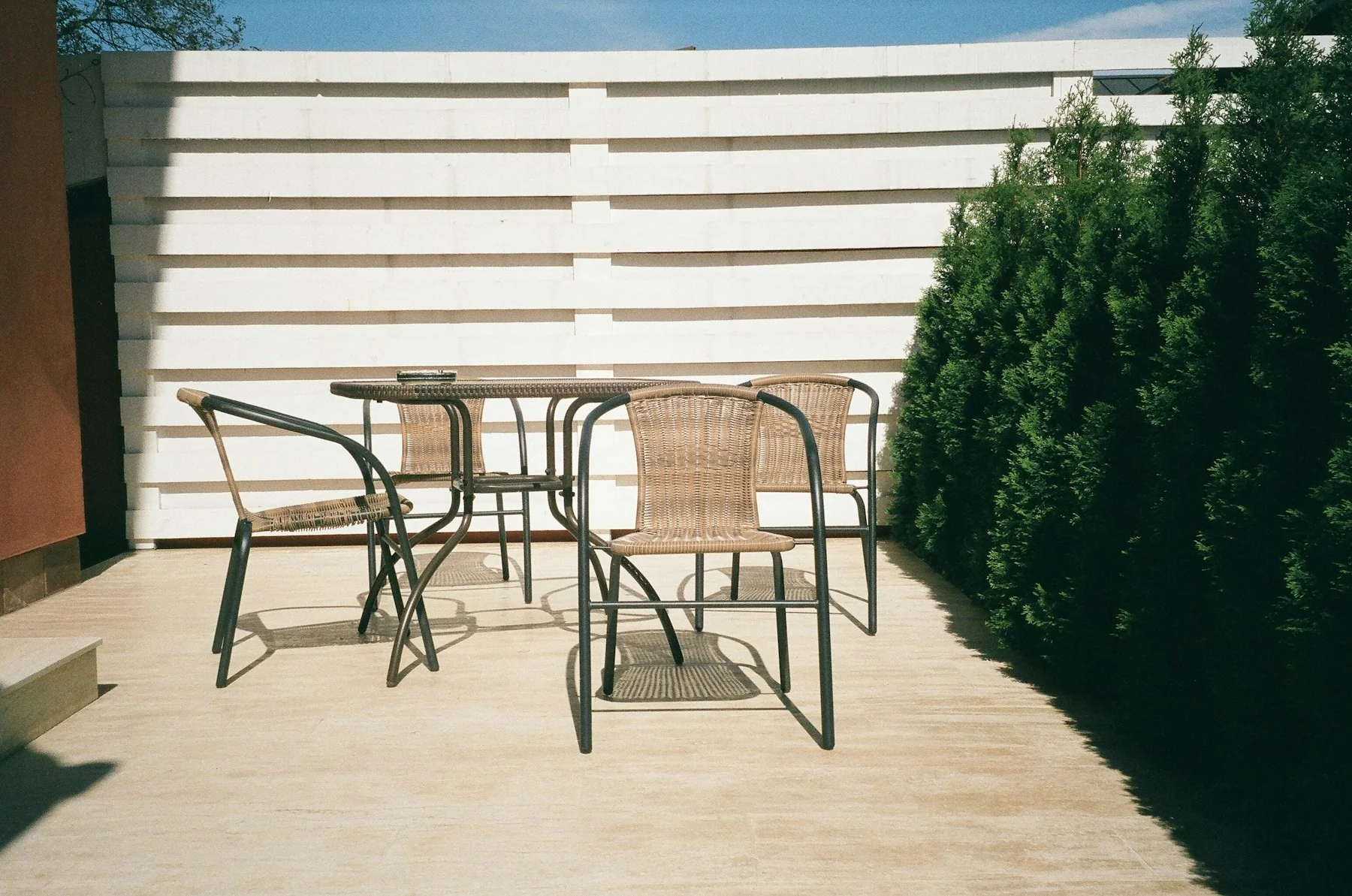
A retractable screen changes a porch twice: when it is lowered and when it disappears into its housing. Phantom offers motorized systems with different mesh and material choices. Insect control, solar shading, and privacy are distinct requirements, so begin by deciding which one the room actually needs.
Draw the lowered screen into the furniture plan
Mark the housing, side guides, operating plane, doors, and frequently used route. A sofa placed comfortably beside an open porch edge may feel very different behind a lowered screen. People still need a convenient way to enter and leave without rearranging chairs.
Ask how the installation meets the existing structure, where power and controls go, and how the screen will be accessed for cleaning or service. Inspect the visible housing from indoors; it remains part of the architecture when the fabric is retracted.
Keep operation realistic
Request the operating instructions and limits for the specified system, including the response to wind and obstructions. Motorization is a convenience, not a reason to assume the screen can be left in every position in every condition.
If you expect to open the porch regularly, rehearse where the furniture will sit with the screens raised and lowered. If the screens will remain down almost all the time, compare a fixed solution too. Include the view, access, maintenance, and service arrangements in that comparison. The motor is useful only if changing the room is a routine you actually want.
Make the evening comparison
Privacy is a relationship between light, view, and distance. Examine the proposed mesh with the porch lit and the garden darker, as well as in daylight. Ask the supplier to explain what a person outside could see under those conditions. A daytime demonstration against a bright landscape cannot settle the nighttime question.
The furniture plan also changes the experience. Sitting immediately beside a lowered screen may feel more enclosed than viewing it across the room. Try the likely seat position and look outward at normal eye level. Where the outlook matters, a carefully chosen material and a clear view between posts may be more valuable than maximizing every advertised screening function.
Leave the operating edge clear
A screen that moves across the room's boundary needs that boundary to remain usable. Include planters, side tables, children's belongings, and seasonal decorations in the discussion of obstructions. Follow the system's instructions; do not rely on a control feature as permission to leave objects in its path.
Ask how the guides, housing, and bottom edge meet the finished opening. If the paving is changing, settle its level before the screen is measured. Those junctions remain visible when the screen is raised, and they need to stay accessible for cleaning and service.