Outdoor heating works best when it begins with people rather than square footage. Bromic's Tungsten Smart-Heat Electric range uses radiant heat and offers several power and mounting configurations. The useful question is where warmth needs to reach: the seats around a dinner table, a pair of lounge chairs, or a working area used on cool evenings.
Put the occupied seats on the plan
Draw the table and chairs in their normal positions, including people seated at the ends. Then ask the heating designer to show the proposed coverage at those locations. A heater centered neatly on a ceiling may not be centered on the people who use the room.
The manufacturer's coverage figures are a starting point for design, not a guarantee of identical comfort in every garden. Exposure, mounting position, height, and the arrangement of the space matter. An open, windy terrace and a sheltered porch should not receive the same recommendation solely because their floor areas match.
Coordinate the ceiling before it is finished
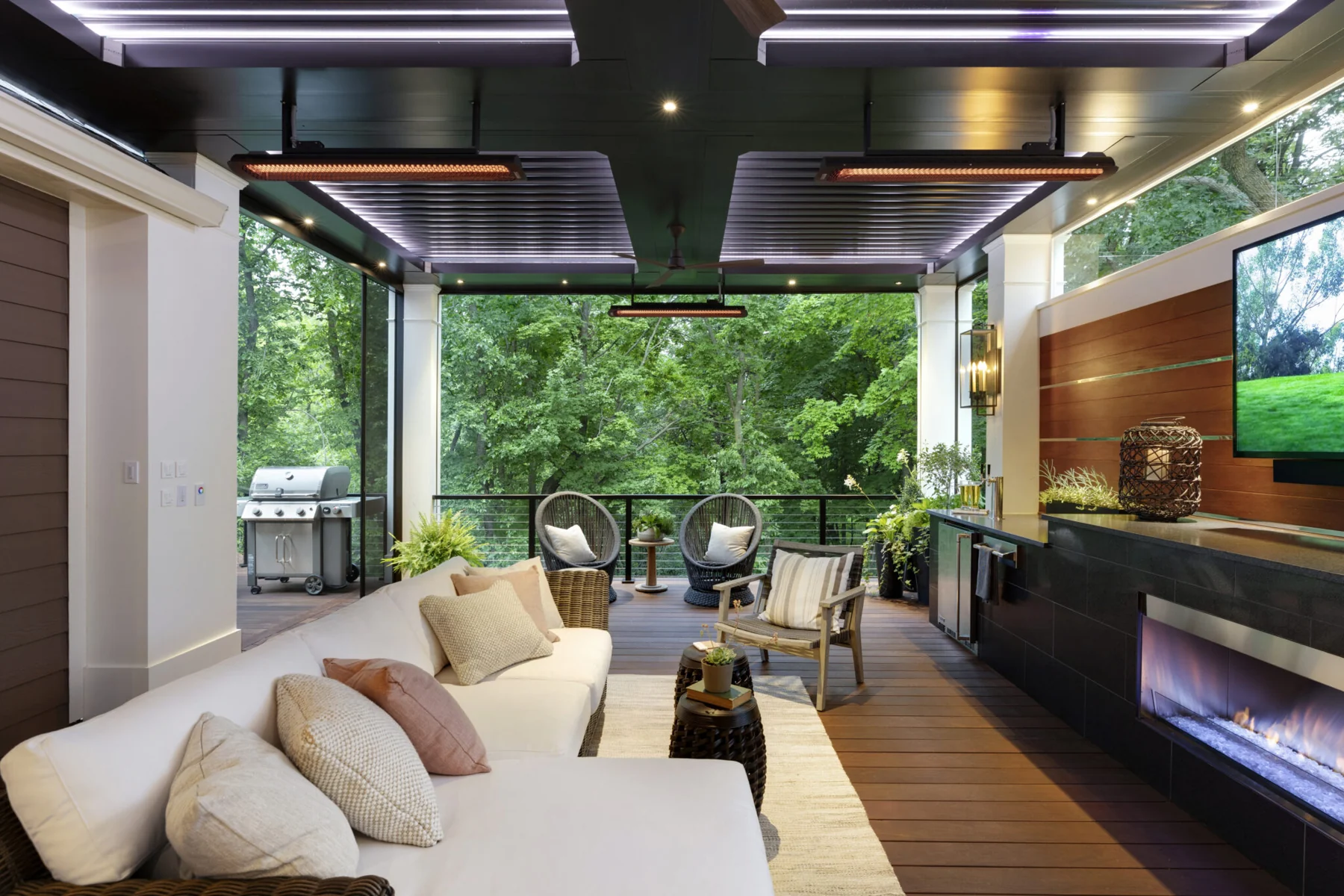
A heater shares overhead space with beams, lights, fans, screens, and sometimes moving louvers. Resolve those relationships while the structure is being designed. A late addition can leave visible wiring, a compromised mounting position, or a conflict with the intended view from the house.
Bromic provides wall, ceiling, and recessing options for compatible configurations. The exact heater and mounting assembly must follow the current installation requirements. Recessing is a designed detail with specific components and clearances, not permission to hide any heater inside a convenient opening.
Make electrical scope explicit
The range includes different wattages and voltage options. Have a qualified electrician confirm the suitable model, supply, circuit capacity, controls, and installation for the property. The product family name is not enough to price the electrical work.
| Part of the proposal | What should be named |
|---|---|
| Heater | Exact model, power, voltage, and finish |
| Mounting | Location, orientation, and compatible hardware |
| Controls | On/off or compatible dimming, with accessible operation |
| Electrical work | Supply, routing, protection, and responsibility for installation |
Heat the room in useful zones
A large terrace may not be occupied all at once. Separate control of a dining group and a lounge can make the system more useful than treating every heater as one switch. Explain the household's ordinary use to the designer before choosing the controls.
Also decide who turns the system off and how guests will understand it. A simple wall control may suit one household; a more elaborate arrangement may suit another. The best interface is the one people can use reliably without searching for instructions on a cold evening.
Compare the complete cost of comfort
Include electrical work and controls when comparing the system with other ways of extending the season. For operating-cost estimates, use the installed power, expected hours of use, and the household's actual electricity rate. A general efficiency claim cannot tell you the cost of your routine.
Ask the installer to mark the intended heated area on the furniture plan. A pair of chairs that will actually be used on cool evenings is a better starting point than an ambition to warm the whole patio. Keep the specified mounting positions, clearances, controls, and electrical work with that drawing.