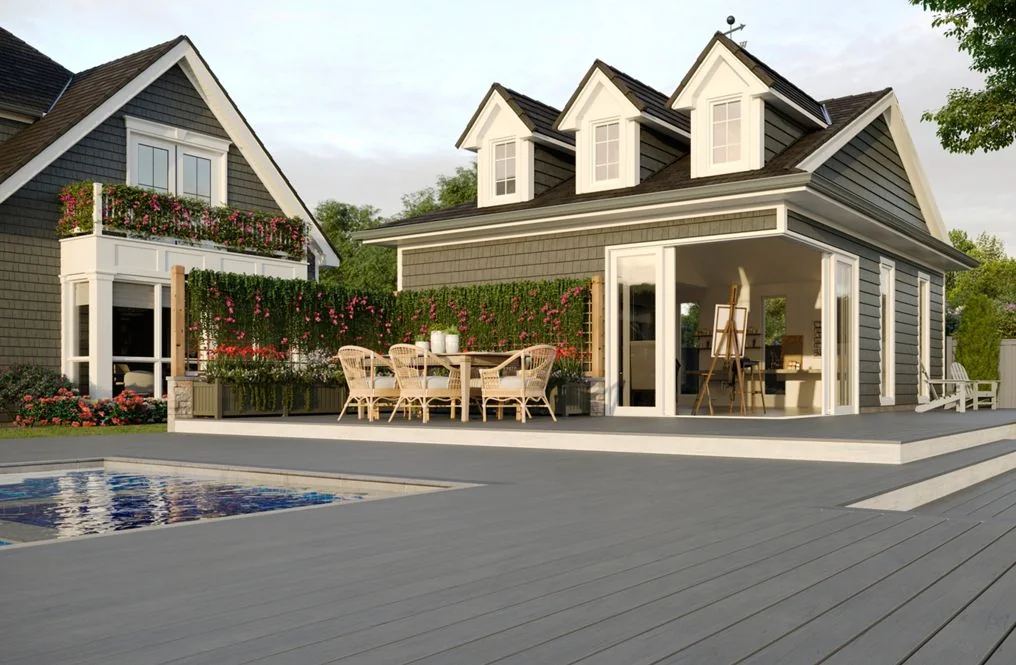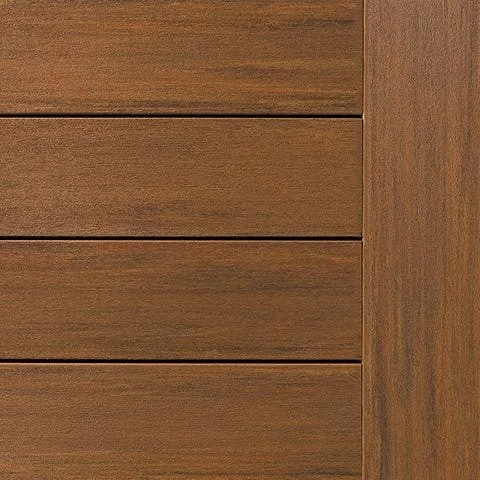
One streaked board can be attractive; a deck full of them is a different composition. Lay out several samples, including the proposed border, to judge how much variation you want beneath the furniture. A small favorite swatch cannot show the effect of a whole surface.
View a field, not a favorite board
Ask to see several boards from the proposed range and how the manufacturer represents expected variation. A single appealing sample can conceal a stronger pattern across a large deck. Compare the group beside the house masonry, siding, and railing before deciding how much variation the room needs.
Include board direction, borders, and breaker boards in the review. Those lines add their own pattern, so a varied finish may become busier once the complete layout is drawn.
Compare the field and the border together
A strong picture-frame border can make even a relatively quiet board look graphic. Lay the proposed border beside several field samples and include the stair detail. Then imagine the same lines across the entire deck, viewed from the principal window.
If the pattern competes with the house, try a single-width field or a quieter border before changing every finish. Ask the installer to show board lengths and unavoidable joins in the layout so the approved pattern can actually be built. Retain the sample range and drawing together; one favorite board is not a complete record of the intended appearance.
Decide which surface should lead
An illustrative house with strongly patterned brick and prominent railing may benefit from a quieter floor. A simpler exterior may allow the deck to become the principal textured surface. Neither is a universal rule; judge the combination in its actual setting.
- Review multiple boards and the documented range of appearance.
- Show the proposed board layout across the whole deck.
- Include stairs and visible perimeter details.
- Keep product-specific installation requirements with the visual decision.