Vintage invites an architectural choice before a color choice: should the deck read as one quiet plane, or should changes in board width mark particular areas? TimberTech identifies this collection as Advanced PVC, without wood fiber, and offers several widths. Those options are useful only when they contribute to a coherent layout.
Draw the pattern at room scale
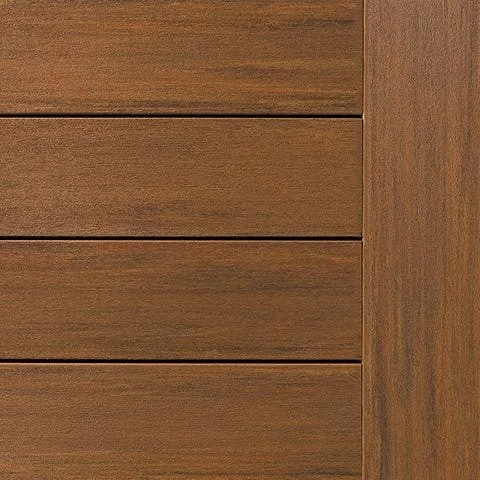
The published widths are 3.5, 5.5, and 7.25 inches. Narrow and wide boards have square edges; the standard width also has a grooved option. Confirm the exact color, length, and profile combinations before developing a pattern around them.
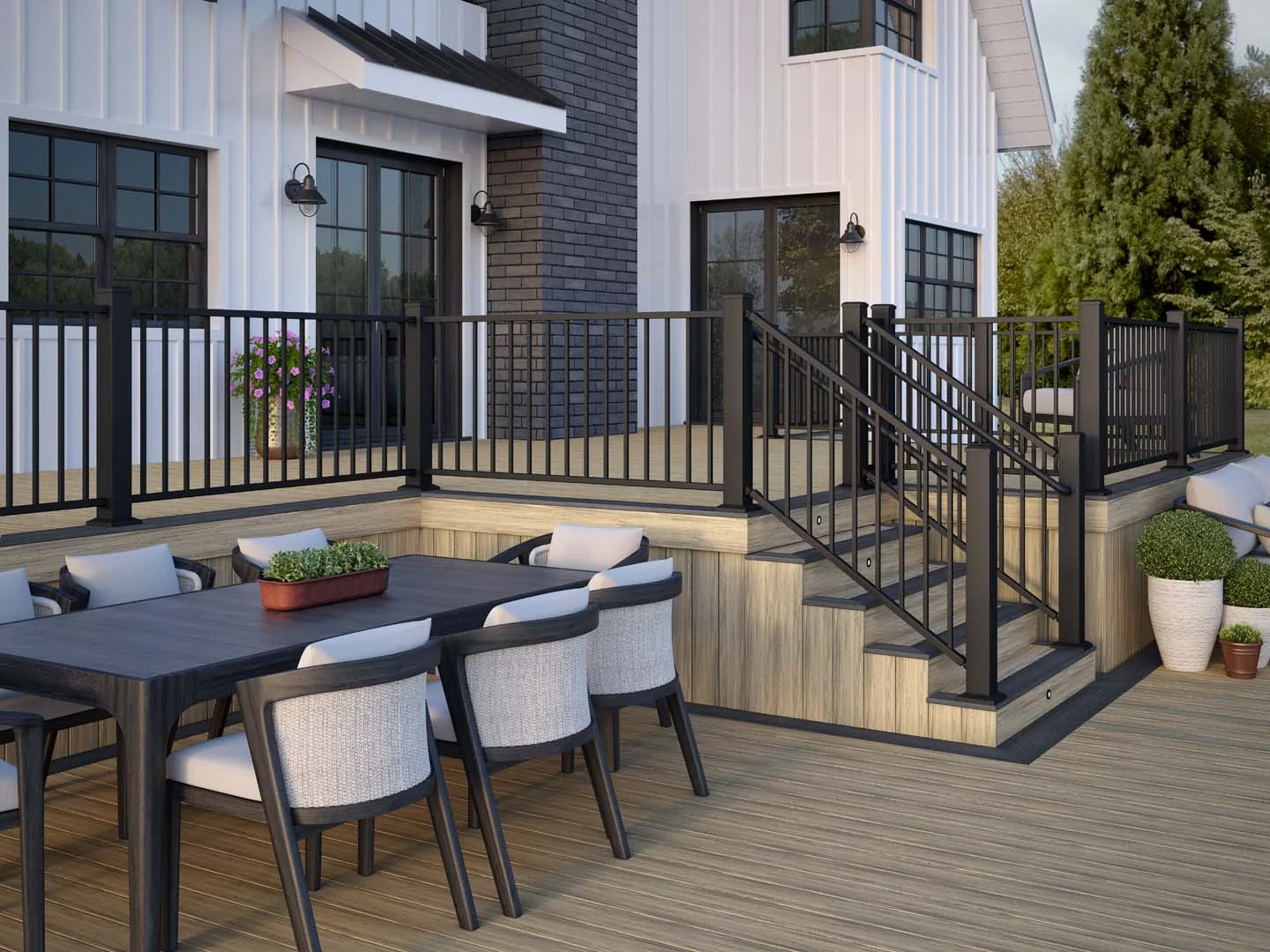
A narrow border can give a dining area a deliberate edge, but several competing borders can make a modest deck feel divided. Sketch the entire surface, including steps, doorways, and the longest uninterrupted view from the house. Use one change in direction or width to explain something about the room. If it explains nothing, compare the simpler layout.
Ask for the edge as well as the sample
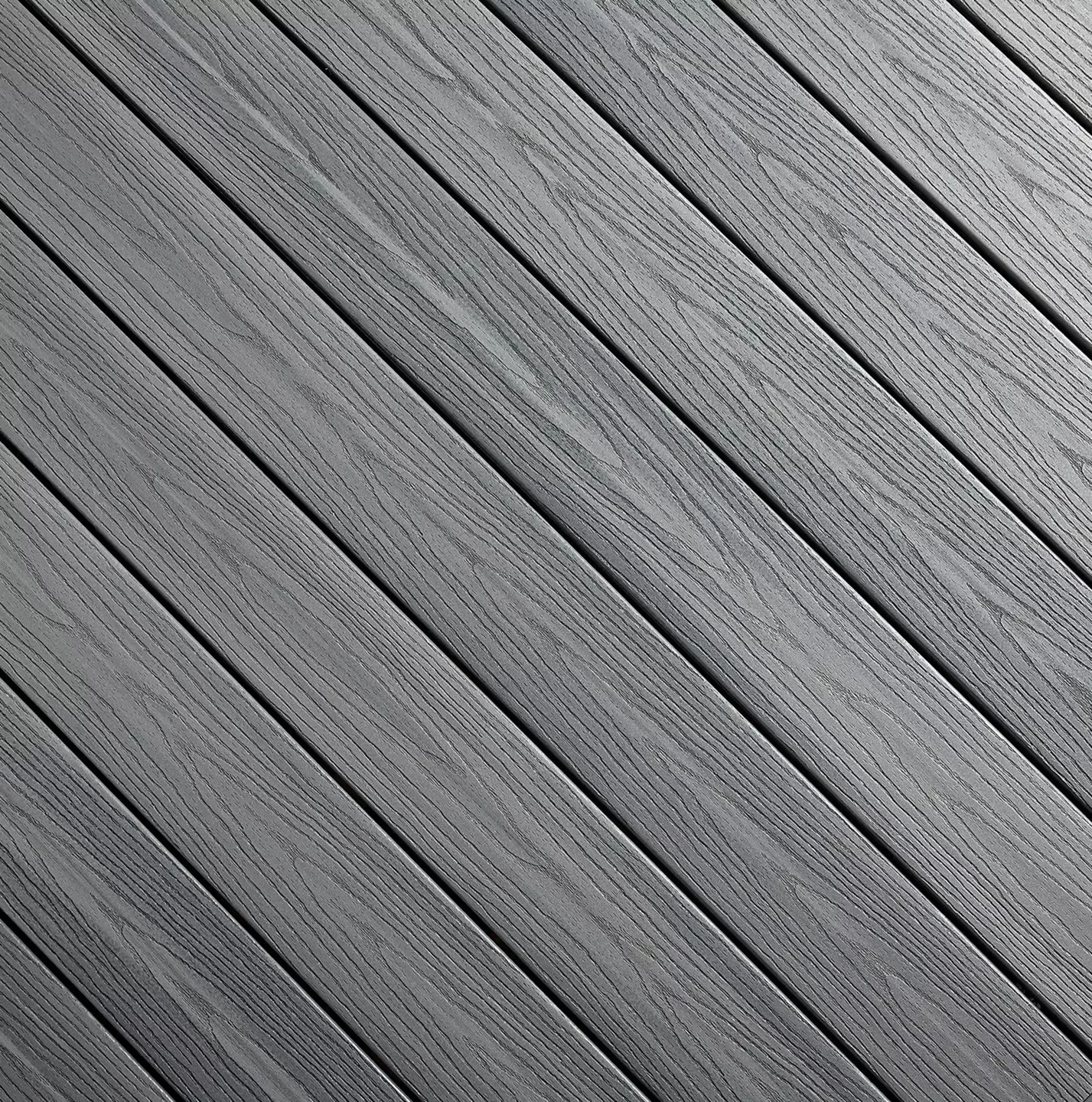
The collection's restrained grain and low-gloss appearance are part of its appeal. Judge a sample next to the siding and railing in the actual outdoor light. Then request the proposed fascia, stair edge, and fastening detail. A convincing board sample does not resolve those junctions.
Ask the installer to show where full boards stop and cut boards begin. A small shift in the starting line may change a conspicuous narrow piece at a doorway. Blocking, spans, fastening, and expansion provisions must follow the specified system's installation requirements; they are not aesthetic adjustments to improvise on site.
Read the care requirements before choosing the finish
TimberTech’s care guide calls for collection-appropriate cleaner and brushes, thorough rinsing, and cleaning in manageable areas without allowing cleaner to dry on the surface. It also cautions against leaving rubber-backed mats and other nonporous items on the deck for extended periods because they can discolor the surface. Those details matter when the furnished plan includes a rug, storage box, pool toys, or a covered cooking area.
Leave room to clean around the furniture and lift any coverings as directed. Show the installer the actual furniture and coverings. Ask how a damaged board would be removed from the specified fastening system, and whether that work would disturb a border, railing, or neighboring boards. Ask for spare-board and replacement-labor costs separately; the warranty does not tell you what a future repair will cost.
Work backward from the doorway
Consider a rectangular dining deck with a door near one end. Running boards along the long dimension may make the surface read as one continuous room, while a change of direction beside the door can turn the entrance into a visual landing. Neither choice is automatically better. Draw the table, occupied chairs, and route first, then check whether the change marks a real transition or simply introduces more joints.
Have the contractor explain what the board direction means for framing and fasteners. Mixed directions can add supporting work as well as cuts. Keep the layout with the approved samples so the doorway, border, and stairs are agreed before the first board is fixed.