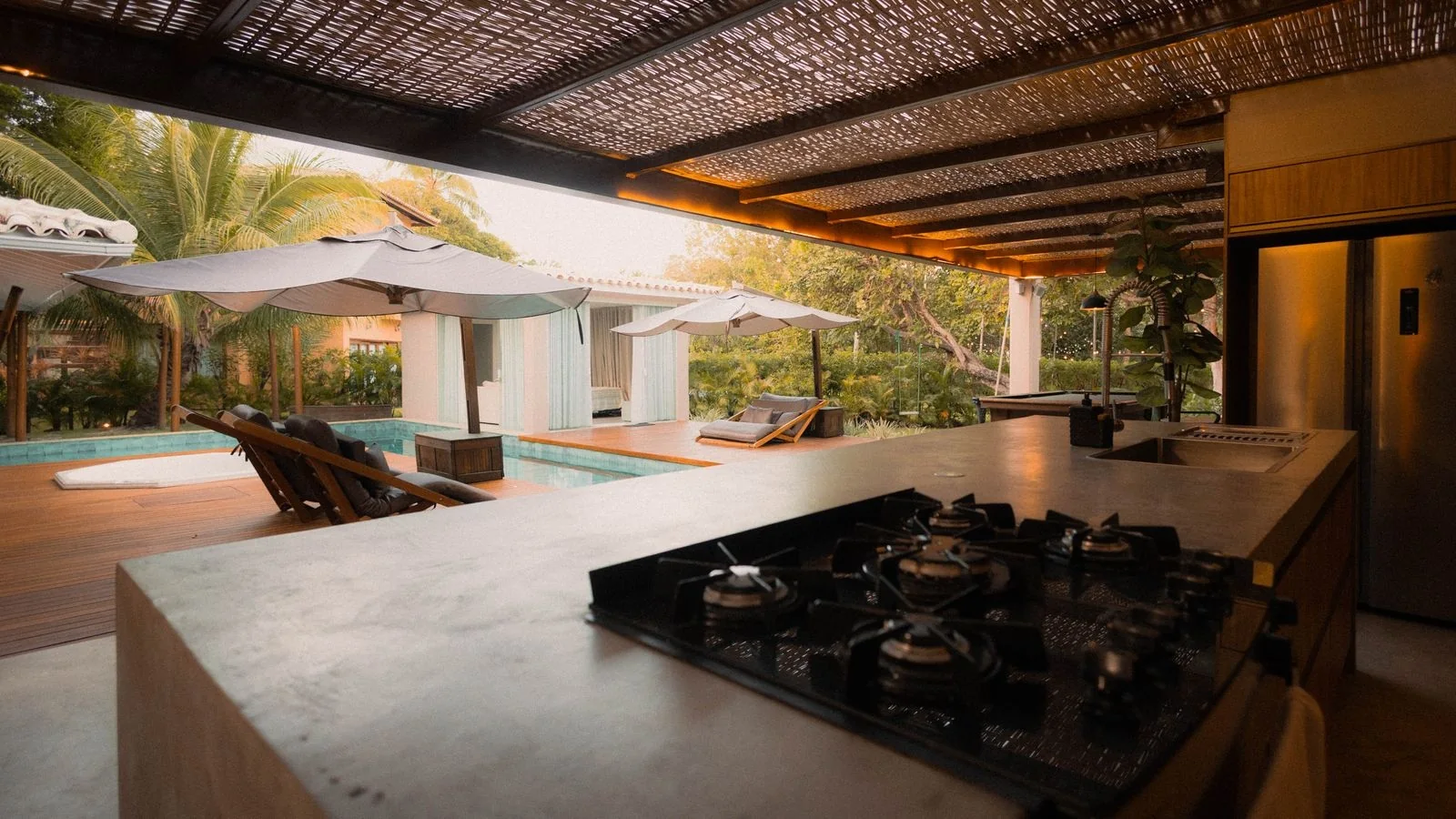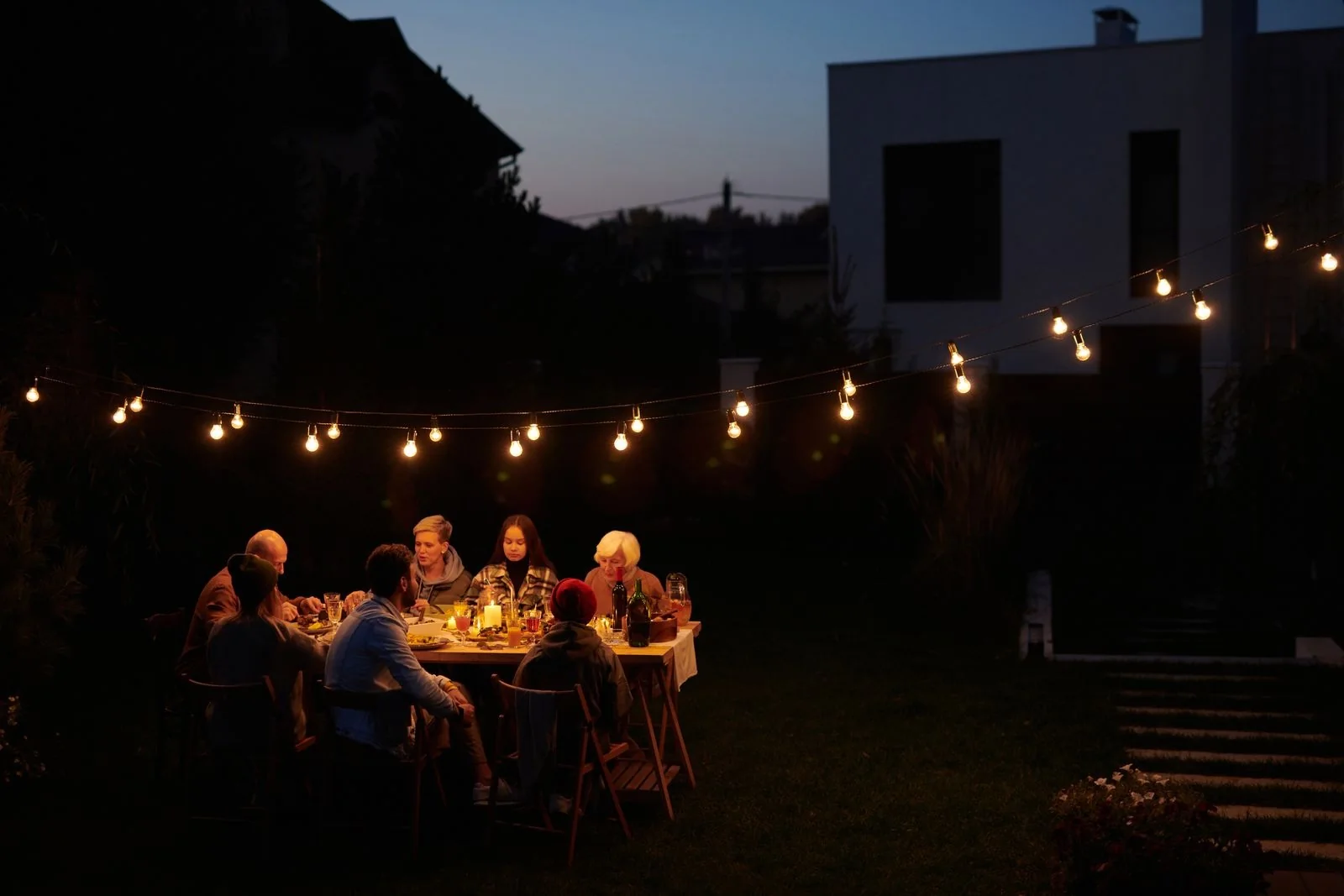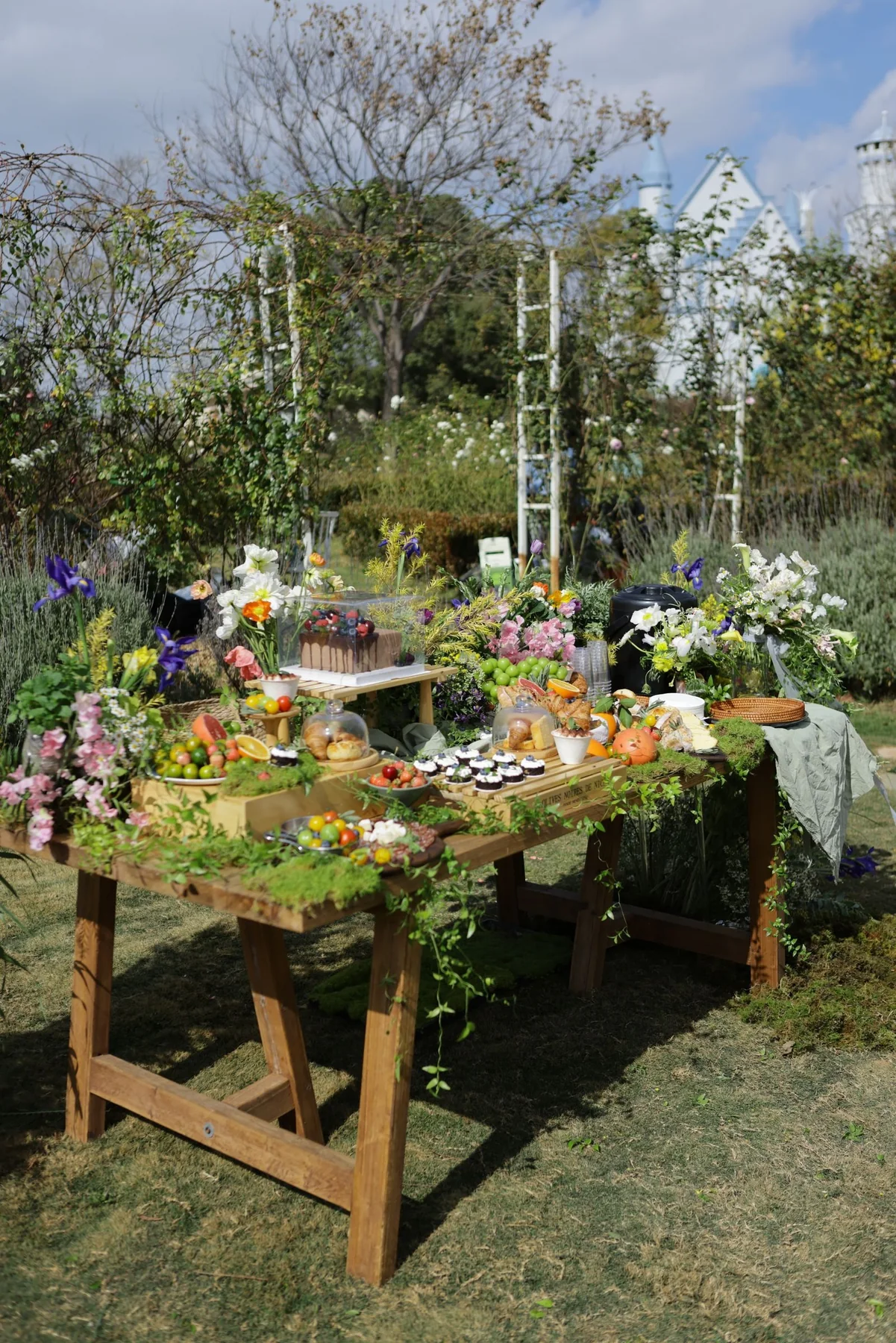
At a gathering, the outdoor table quickly becomes a crossroads for food, drinks, empty dishes, and conversation. A separate serving station can take pressure off that table and give the host a clear place to work. It can be a movable piece rather than a permanent kitchen addition.
Divide the surface by task
An illustrative gathering might use one end for clean glasses and drinks, the center for shared dishes, and a separate return tray for used items. The exact arrangement will change, but deciding the sequence prevents every surface from becoming an undifferentiated landing place.
Set out the actual bowls, trays, and containers before selecting a console or trolley. Confirm the piece's load, exposure, cleaning, and heat limitations with its supplier. Decorative appearance alone does not establish suitability for serving equipment.
Give clean and used items different landings
Use separate trays or clearly defined areas for food ready to serve and dishes returning indoors. Place the return tray on the route back to the kitchen so it does not drift into the drinks station. Rehearse the sequence with empty dishes before the gathering.
Food storage and holding conditions remain a separate part of hosting; a stylish sideboard does not replace appropriate food-handling arrangements. Keep the furniture review focused on a suitable surface, the space for the actual containers, and a clear route. A station earns its place when people understand where things go without being directed throughout the meal.
Put the busiest task off the main route
If guests repeatedly approach for drinks, that station needs a place for someone to stop and another person to pass. Moving it slightly away from the kitchen door may help more than buying a larger table. Keep the cook's working route distinct where the layout allows.
- Rehearse carrying a full-size empty tray to the station.
- Open any storage doors while someone stands at the surface.
- Leave a defined place for items returning indoors.
- Check where the furniture goes in poor weather.
A serving piece that also supports ordinary outdoor storage or a useful landing can earn its footprint between gatherings. If it has no everyday role, choose something easy to store and bring out when needed.