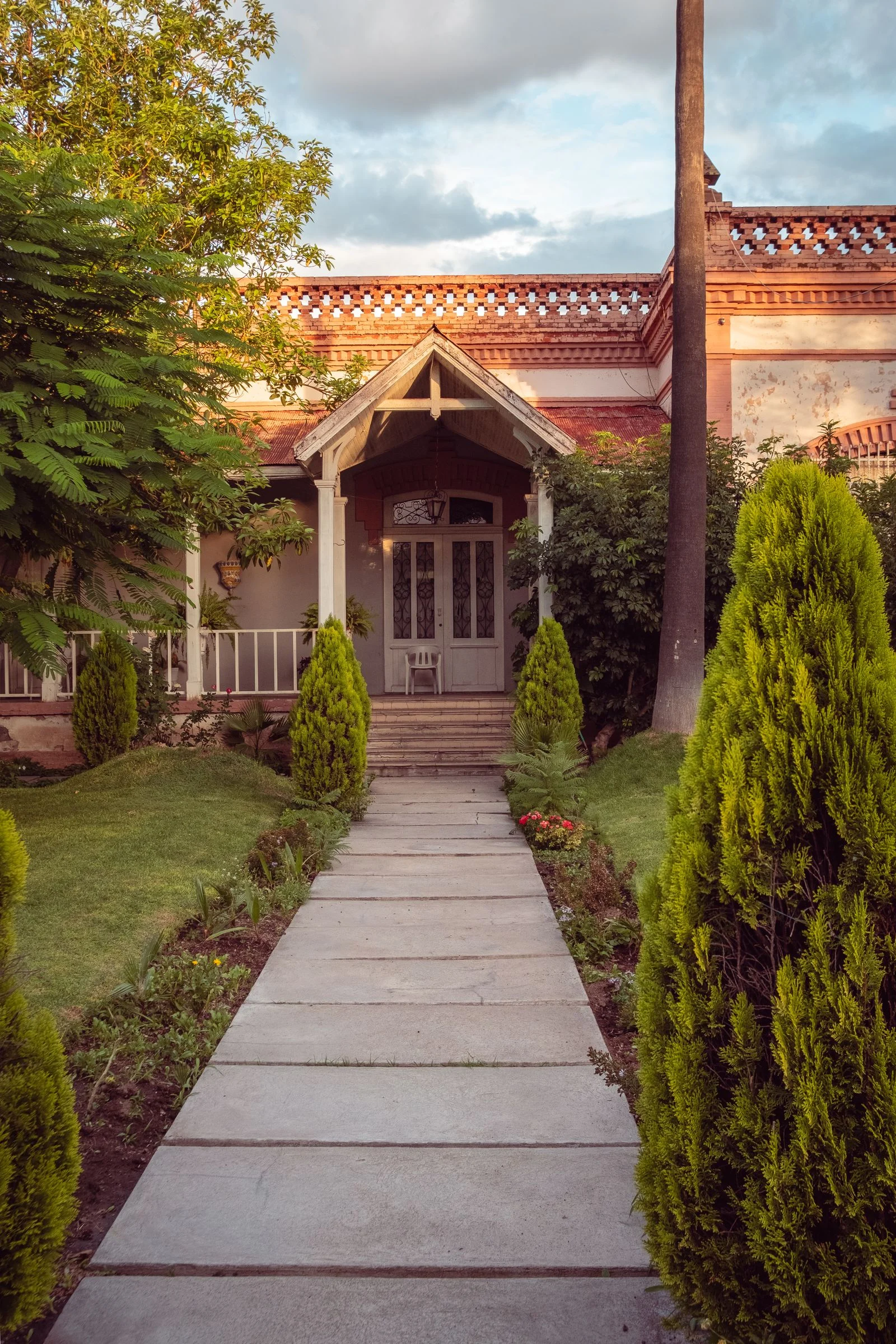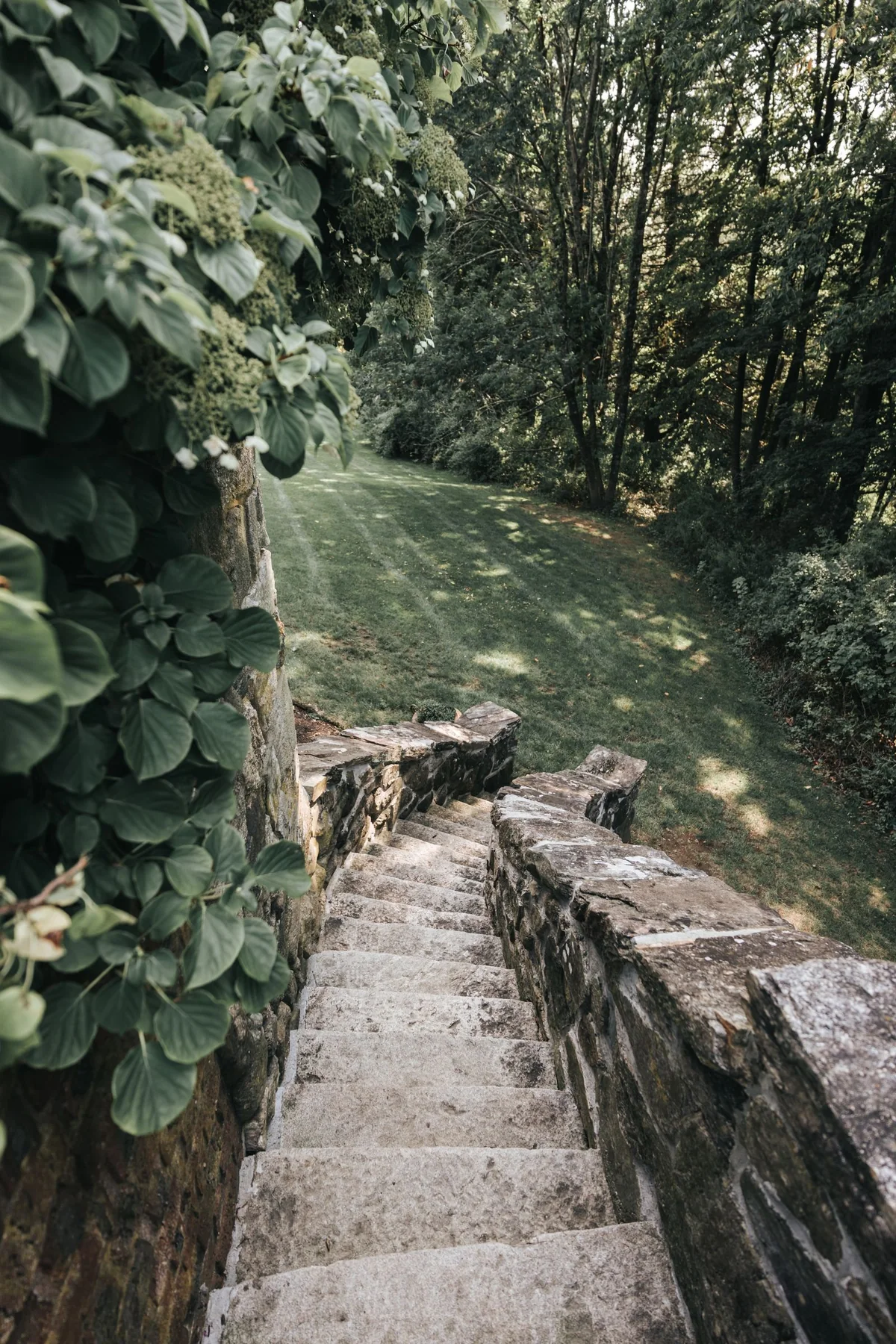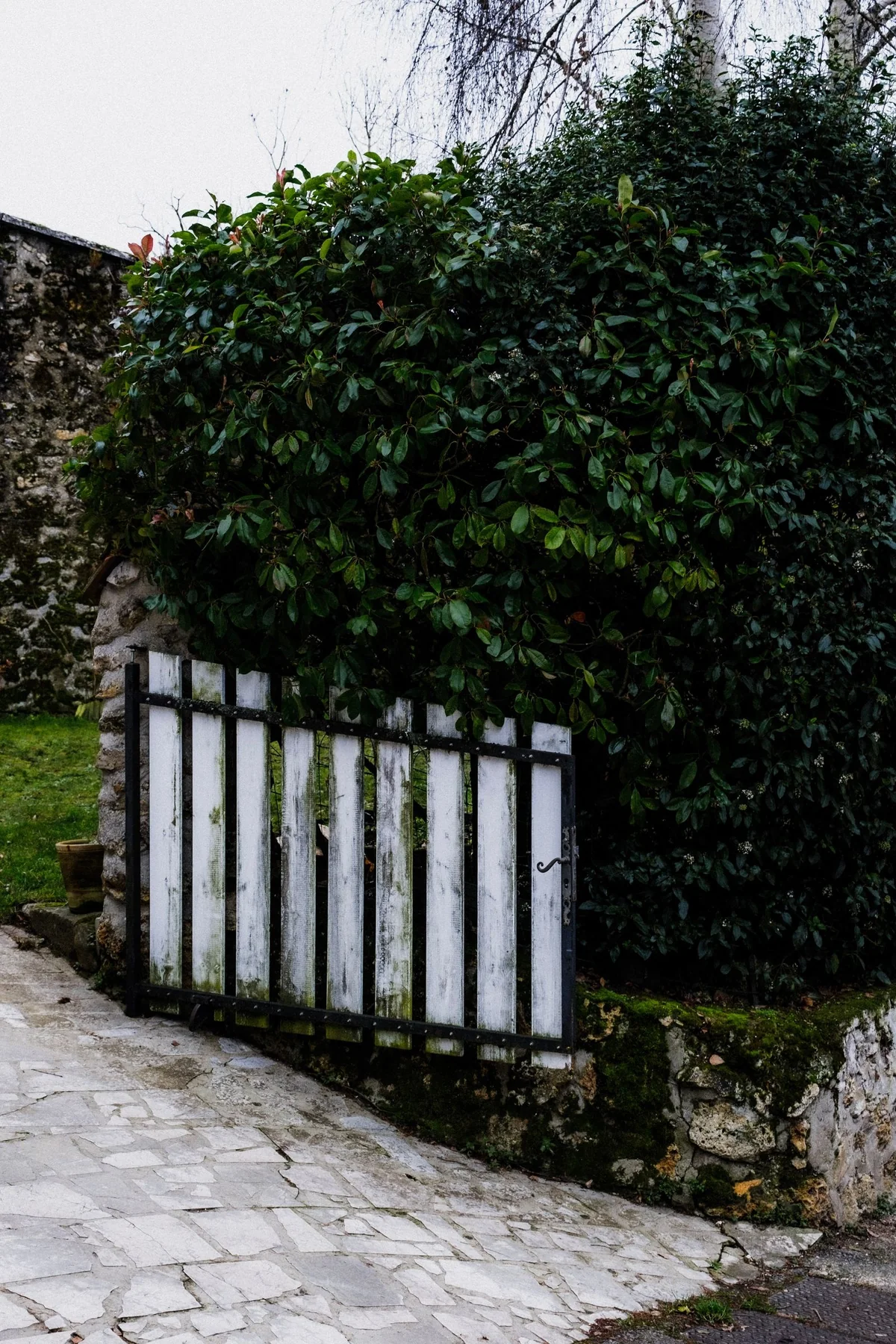
A gate needs room to swing and somewhere for you to stand while opening it. With groceries or garden tools in hand, those small allowances become noticeable. Settle that everyday movement first, then consider the glimpse of garden the opening will frame.
Review the complete opening
A gate is more than its decorative leaf. The approach, posts, hinges, latch, swing, and clear space beyond all affect use. Walk through with the largest routinely moved item and discuss those needs with the contractor before choosing the pattern.
Special barrier requirements, including those associated with pools, need their own professional resolution. A visually attractive garden gate should not be assumed to satisfy a different safety function.
Compare the open gate with the opening
The opening between posts and the clear route with the gate swung back may differ. Hardware, stops, a nearby step, or stored objects can reduce the space available to pass. Ask the contractor to show the complete operating arrangement, including where a person stands to use the latch.
Try the largest ordinary item that needs to pass using its measured outline. Include the turn immediately before and after the gate. A broad opening does little for a long wheelbarrow or mower if the approach has no turning room. Keep any special barrier function in the technical design rather than changing hardware to solve convenience alone.
Make the first glimpse useful
| Gate condition | View to review |
|---|---|
| Closed | How the gate belongs to the full boundary |
| Opening | Whether the swing conflicts with a person, step, or stored object |
| Fully open | What destination or route the opening reveals |
| From inside | Whether departure remains intuitive after dark |
A partial view can feel inviting without exposing the entire garden. The important distinction is between a deliberate glimpse and an ambiguous route that leaves visitors unsure where to go.