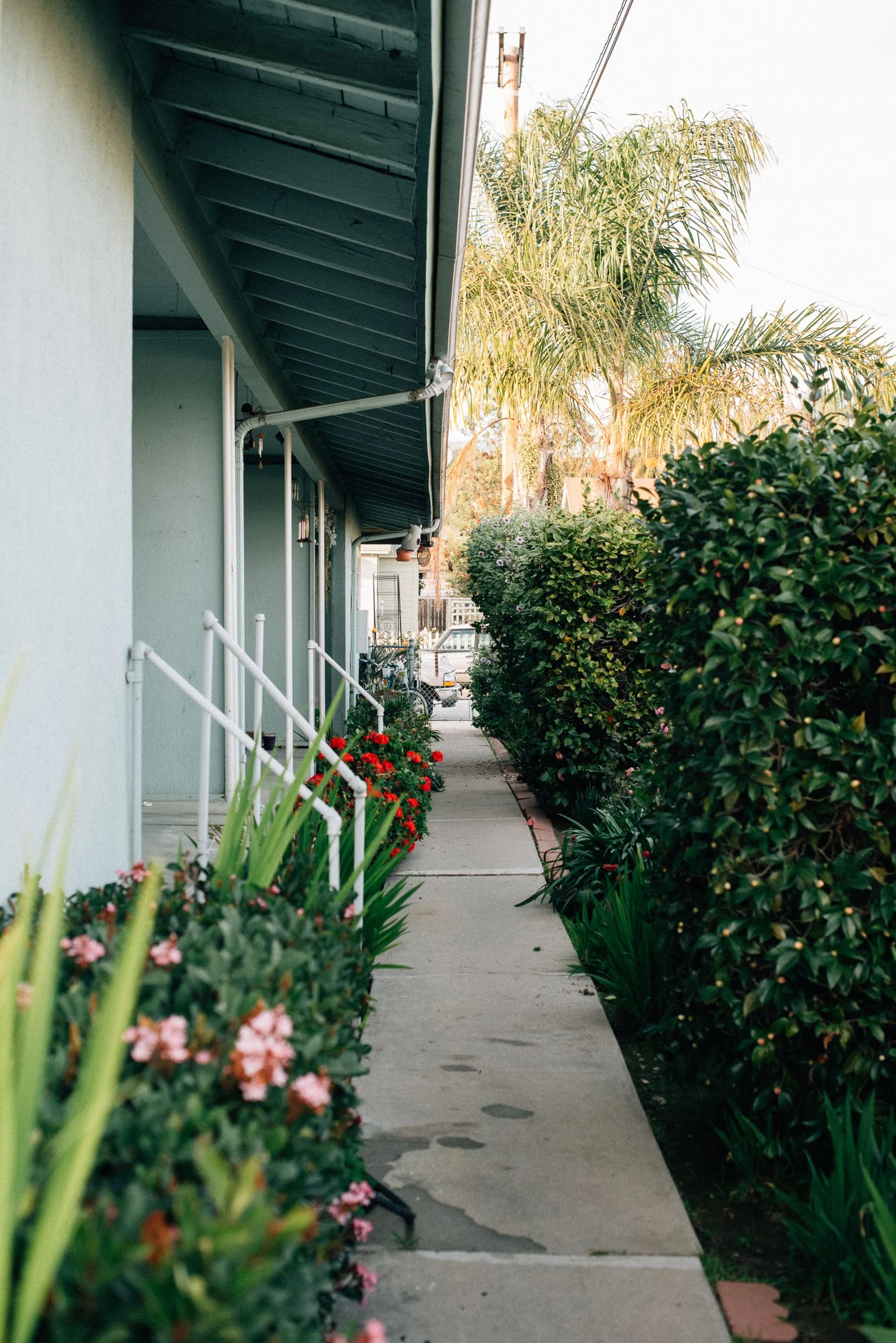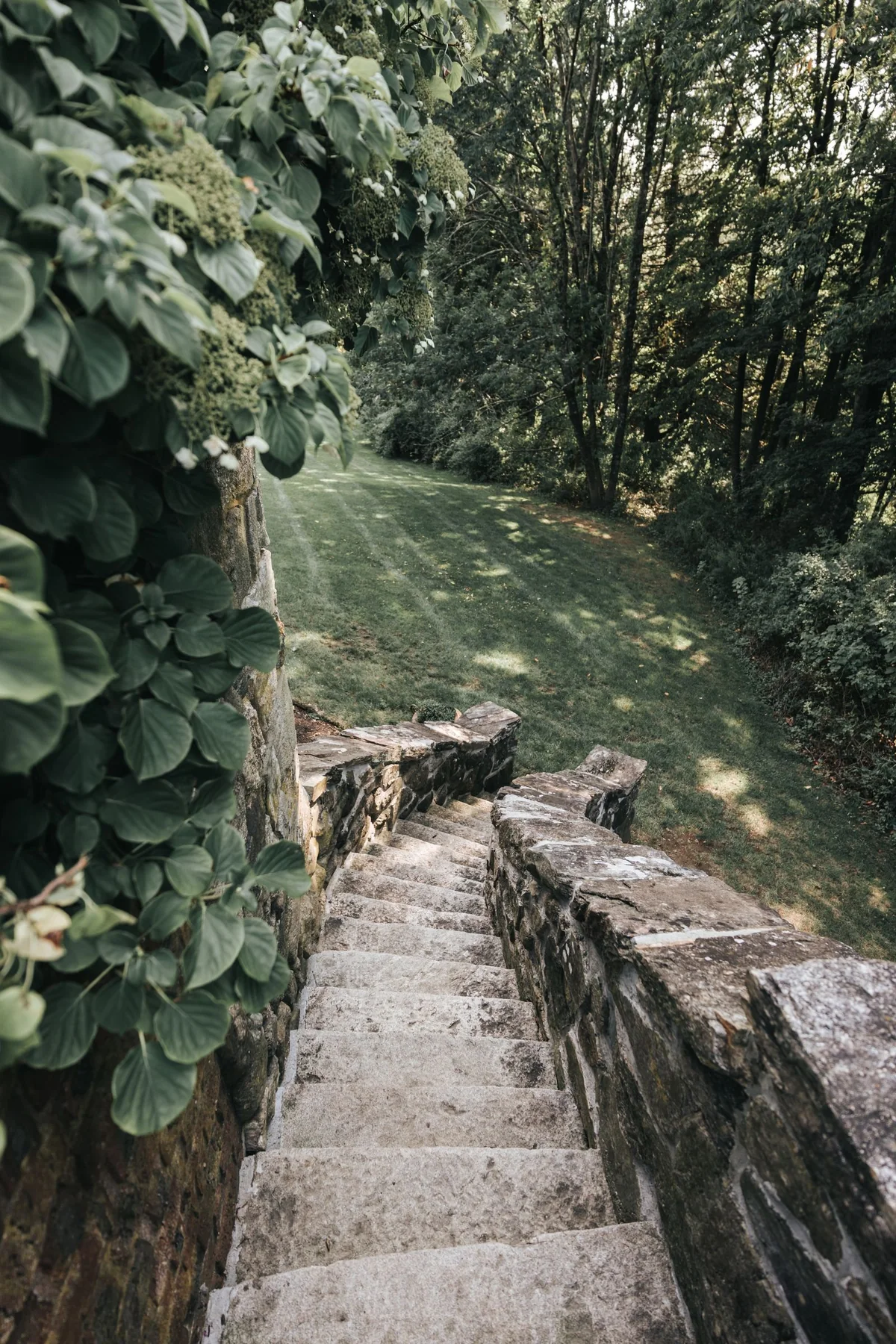
The worn corner of a lawn is a clue. So is the chair you move whenever you take the trash out. These small inconveniences reveal where a garden path is working against daily life. Follow the troublesome trip before choosing the material that will improve it.
Separate errands from garden walks
A direct trip to the garage and a leisurely walk through planting have different purposes. A route designed for discovery may be pleasant on a weekend and irritating when carrying groceries in the rain. Give each path a job before choosing its shape.
On a simple sketch, draw the trips you make repeatedly in a heavier line and occasional routes in a lighter one. Where lines cross, consider whether people can pass, pause, or open a gate comfortably. Where an intended curve is repeatedly bypassed, ask whether the path is ignoring the actual destination.
Measure the pinch point
The narrowest usable point may be a gate handle, a projecting plant, or a turn beside stored bins rather than the path itself. Measure the clear opening at those points and record the item you need to move through it. Include its turning space, not just its width.
Use those observations to review the route with the designer. A wider middle section will not resolve an awkward entrance. Where two people need to pass, identify a deliberate place for that movement rather than assuming every part of the garden path must have the same dimensions.
Make the edges intentional
A path can frame planting, meet a patio, or pass behind a seat. Consider those relationships rather than selecting the route in isolation. Where the path is viewed from indoors, its endpoint can also become a quiet focal point.
Test the equipment as well as the person
A wheelbarrow, mower, rolling bin, or mobility aid can reveal a problem that a person walking empty-handed does not notice. Include the equipment you actually use and any changing household access needs in the review. Gates and turns deserve particular attention.
- Mark door swings and the space needed to stand while opening them.
- Show where bins or tools wait without occupying the route.
- Trace the path with the largest regularly moved item.
- Review the endpoint from the house; it may become a prominent view.