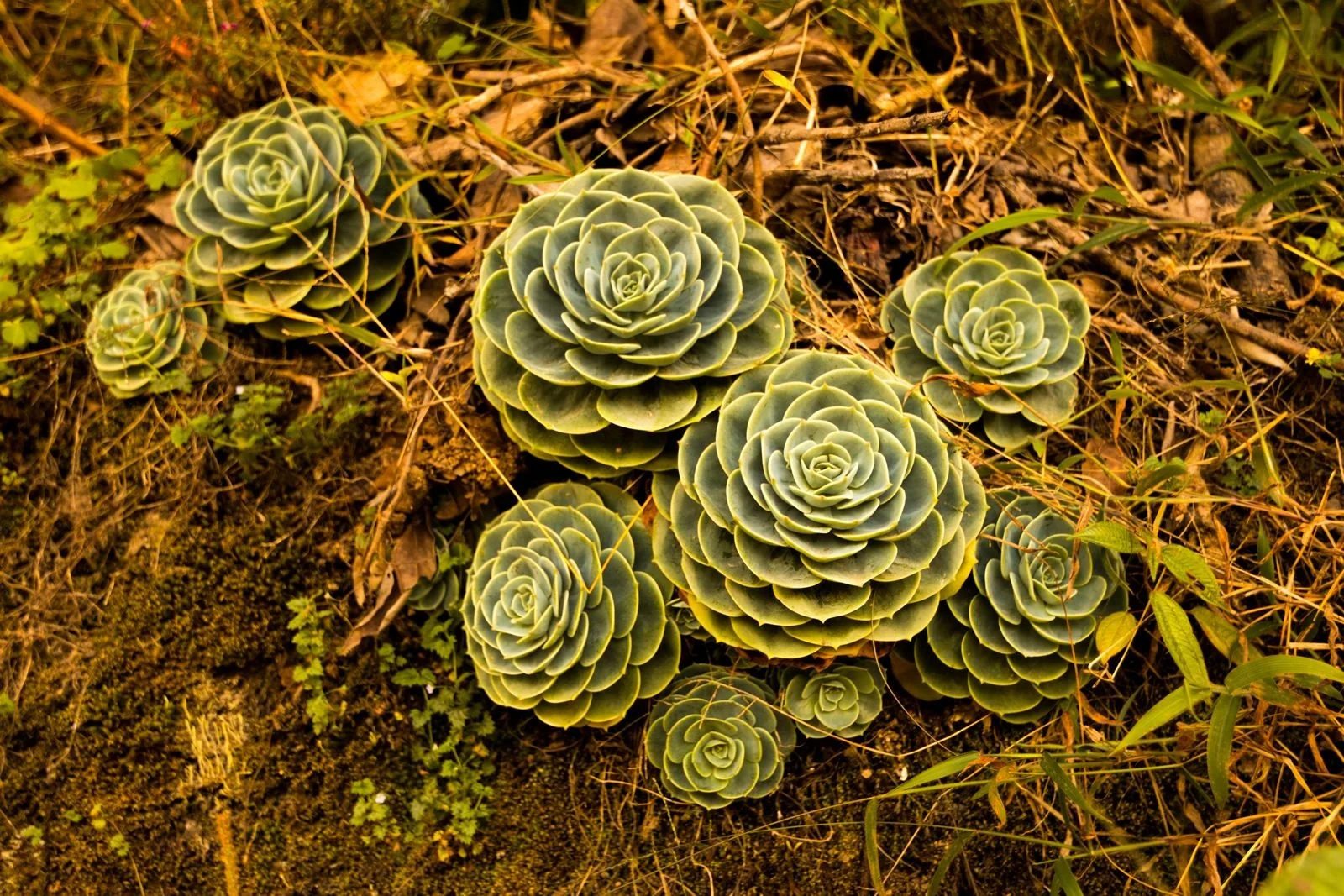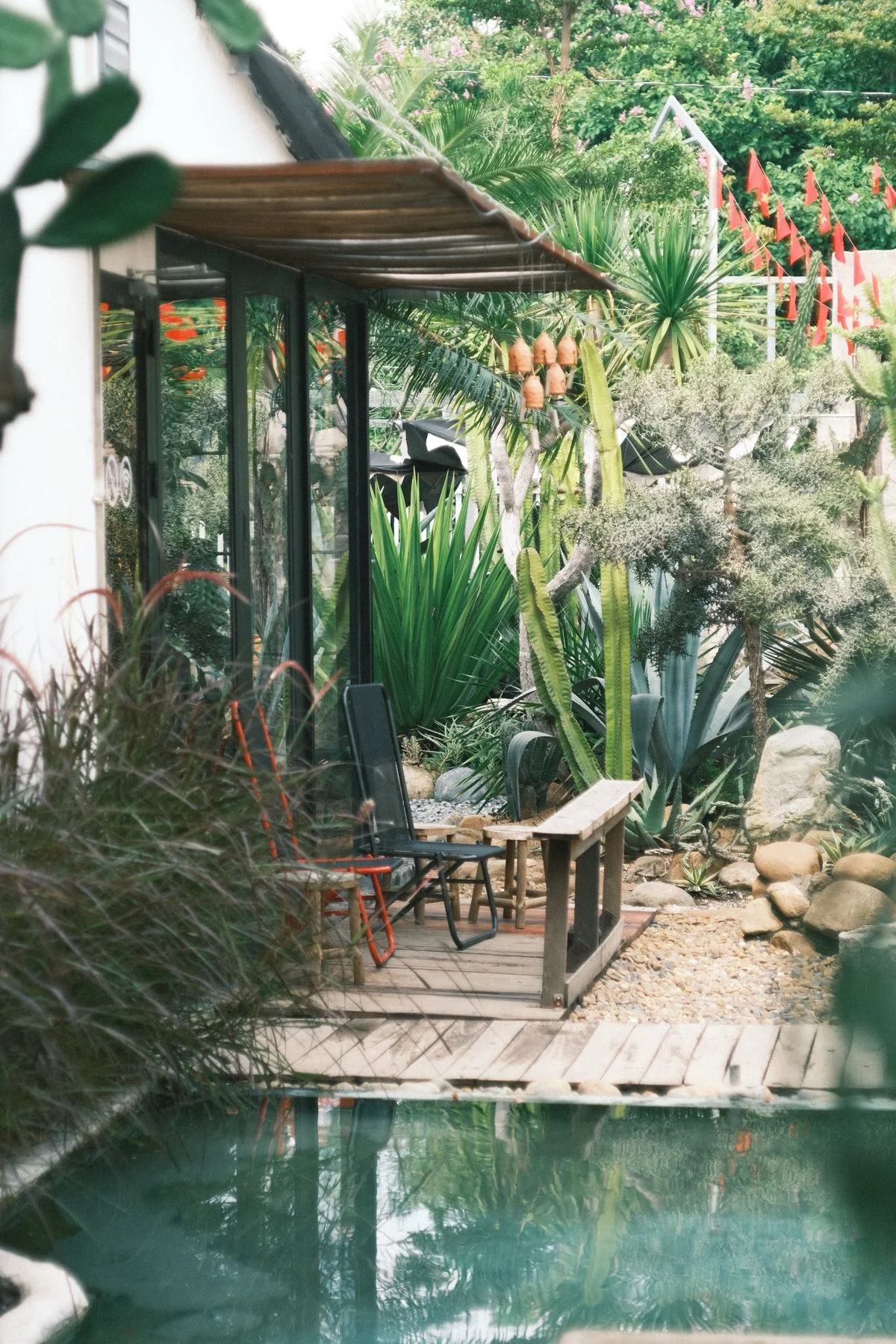
A desert-inspired garden often draws attention to the shape of an object and the space around it. Warm mineral colors, deliberate shadows, and a few strong plant forms can create a composed view. The useful lesson is restraint, even when the garden is far from an arid climate.
Make the space between objects deliberate
Place a few proposed focal forms on a simple sketch, then leave the surrounding ground quiet. The empty intervals help the objects read clearly. Adding a small accent to every gap can remove the restraint that made the reference appealing.
Translate the forms into plants suitable for the actual climate and site. A desert-associated species should not be selected merely because its silhouette appears in a favorite photograph. Local conditions and care determine the living palette.
Give the open ground a practical description
An area that appears empty in a reference may be a path, a drainage zone, or simply a deliberate visual interval. Identify the role you want before choosing the surface. Furniture movement and household access still need suitable ground even where the design celebrates restraint.
Ask for locally appropriate plants that provide the desired silhouettes without copying an unfamiliar climate's species. Show their expected mature spread around the open intervals. If the forms will eventually merge into one continuous mass, decide whether that is the intended result or whether the original spacing needs another review.
Compare the mineral colors with the house
Warm gravel, paving, walls, and containers can form a coherent family without matching exactly. View the group outdoors, where shadows will contribute another layer. Keep surface performance and access requirements separate from the desired visual effect.
- Choose the principal ground surface for its actual use.
- Identify a small number of focal forms.
- Review plant outlines at mature size.
- Preserve a comfortable seat and appropriate shelter.
- Ask how the complete surface system handles the site conditions.
Design for the heat you actually have
In a hot, dry yard, a pale mineral palette and sculptural plants do not establish that the space will be comfortable or easy to water. University of Arizona Extension distinguishes ordinary full sun from reflected heat beside walls and paving. It also notes that irrigation remains important during drought and extreme heat. A plant associated with a dry landscape is not automatically suited to every exposed corner.
For a modest first intervention, observe one sitting place at the hour you want to use it. Record whether the seat is in direct sun, whether a nearby wall radiates heat, and where shade falls later. Move the furniture before adding more hardscape. Review any new shade structure and its anchorage for the actual site; a visually light structure still has physical requirements.
| Site observation | Decision it should change |
|---|---|
| A west-facing wall intensifies exposure | Select planting for that reflected-heat condition and reconsider the seat position |
| Plants with different watering needs share one zone | Review the irrigation grouping before adding more plants |
| The desired sitting time falls outside the shade | Change the arrangement or shade plan before extending the terrace |
| Mineral ground is part of a runoff route | Understand the water route before changing grades or covering the surface |
Read stress before turning up the water
A drooping or scorched-looking plant does not tell you its cause at a glance. University of Arizona Extension notes that wilting can follow saturated soil as well as insufficient water: roots without enough oxygen cannot function normally. Its plant-stress guidance recommends looking at the setting and recent changes before choosing a treatment.
Check the particular plant's root area and the irrigation delivery. Is an emitter blocked, displaced, or watering a patch that roots no longer occupy? Has a new wall changed the afternoon exposure? Did trouble begin after a schedule change or a prolonged wet period? Record what you can observe without digging through the root system, and take the plant's name and photographs to a local extension service when the cause is unclear.
Keep that investigation separate from the desire for a cleaner design. Replacing a struggling plant with another of the same kind in the same unexplained conditions may simply repeat the problem. A better composition can begin with understanding why one corner behaves differently.
For a new planting, ask for an establishment plan as well as its expected long-term water needs. Put that plan beside the irrigation-zone drawing and name the person who will check delivery. “Drought tolerant” is a selection characteristic; it does not describe every stage of a plant's life or every exposure within the yard.
Borrow the form in another climate
In a wetter or colder region, keep the visual lesson—clear silhouettes, deliberate intervals, a restrained material group—while changing the living and construction palette. A photograph from Arizona cannot specify plants, drainage, or winter performance for a yard in Pennsylvania. Describe the desired shape and mature size to a local nursery or designer, then compare suitable plants for the actual light, soil, moisture, and winter conditions.
Try one existing bed before changing the whole garden. Remove visual clutter, identify the plants worth retaining, and test the view from the house. A successful translation may use the same old paving and entirely different plants. Its resemblance comes from the composition, not from importing an unsuitable species or assuming the climate will behave the same way.