A handful of garden flowers can bring the season to the table without reproducing a florist's arrangement. A bent stem, an uneven opening, or a leaf with an interesting edge can give the vase something of the place it came from. The useful restraint is deciding what to leave in the garden.
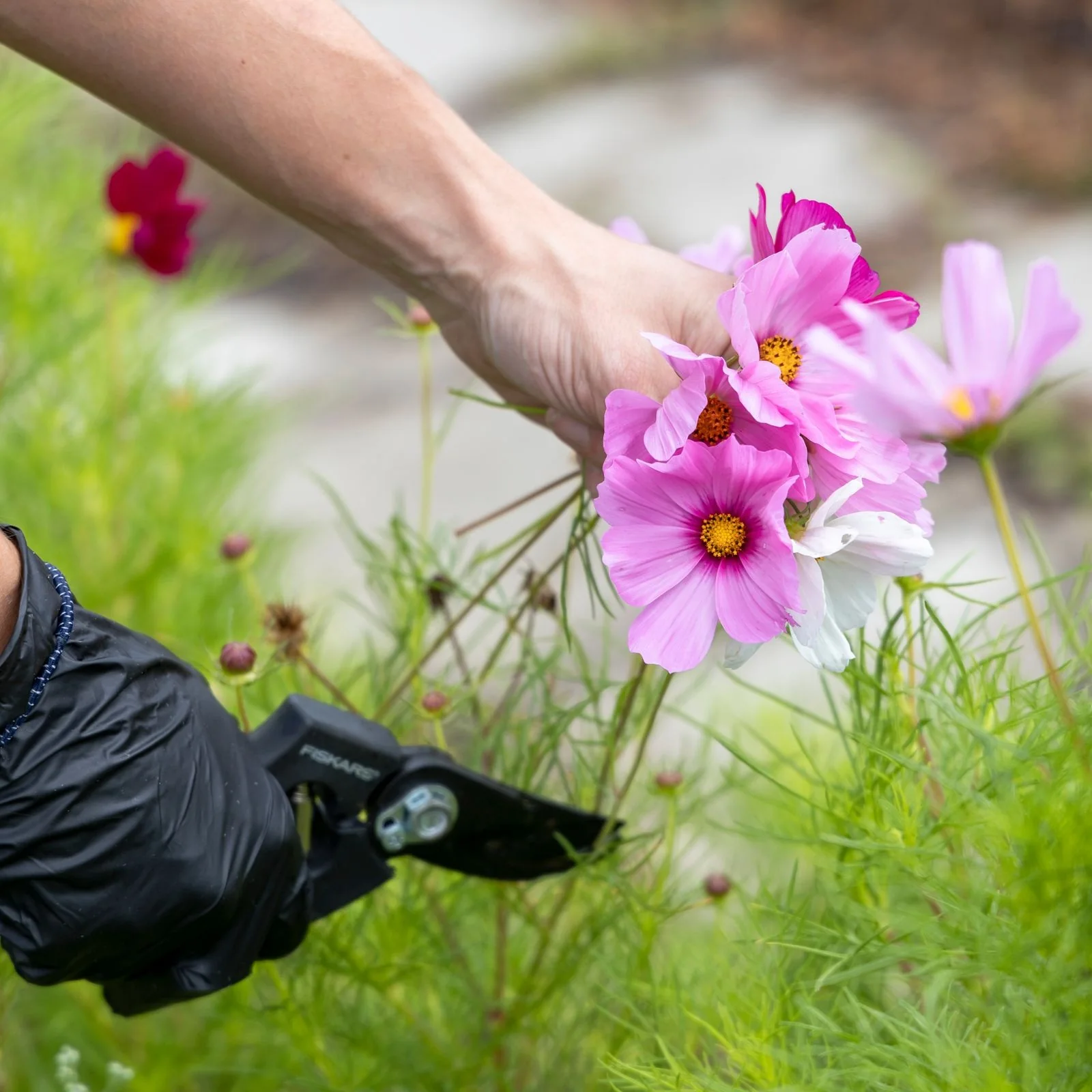
Walk the bed before taking the scissors. Look for a few stems that can be removed without emptying the best part of the border. Choose from plants you can identify and are allowed to cut. A purchased bunch from a local grower is an equally good beginning when the garden has little to spare.
Begin with the vessel
Choose the vase before cutting so the stems have a destination. Its opening determines how much material is needed and how easily the stems will support one another. A narrow-necked vessel can make a few stems feel complete. A wide bowl asks for a different approach and usually more support.
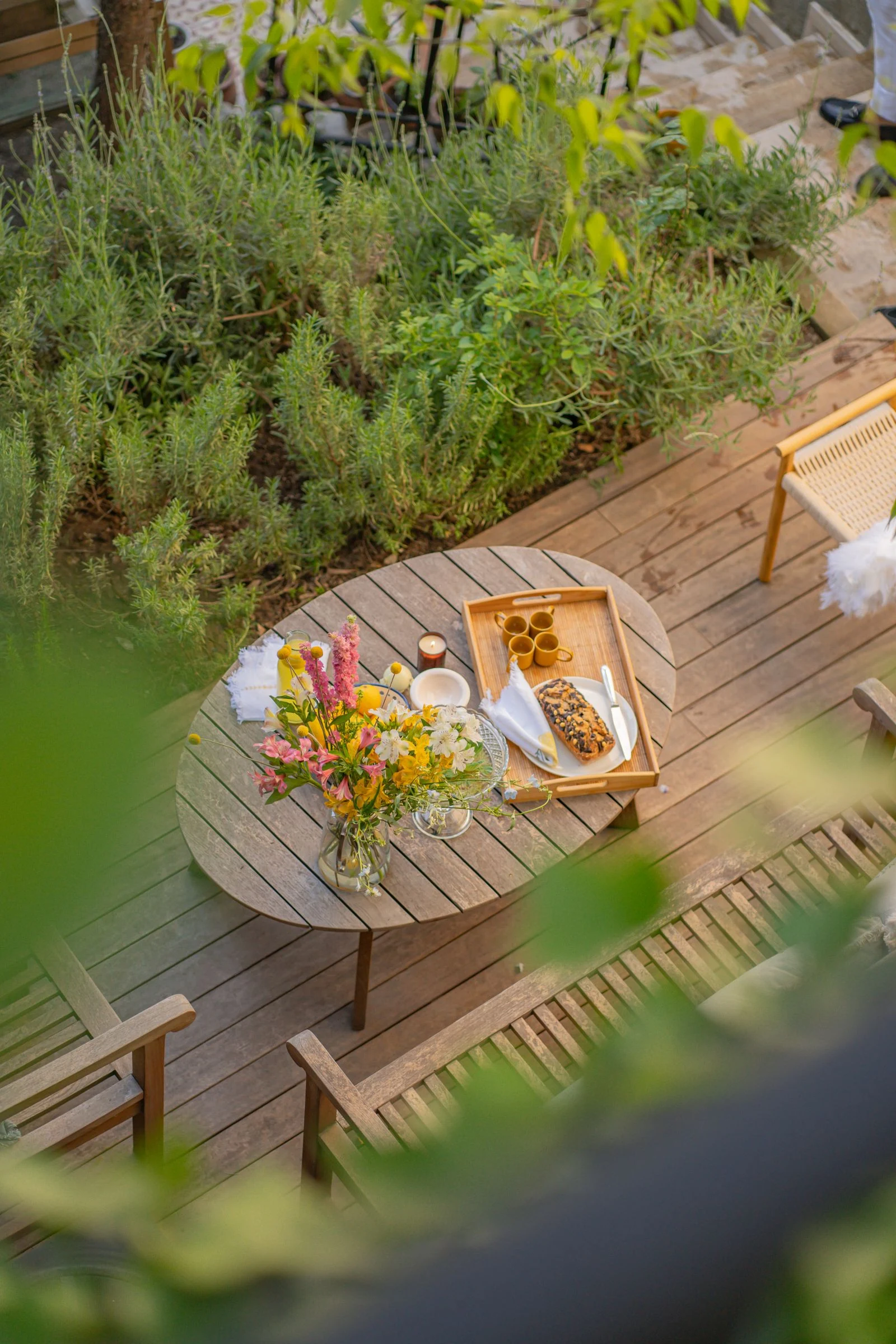
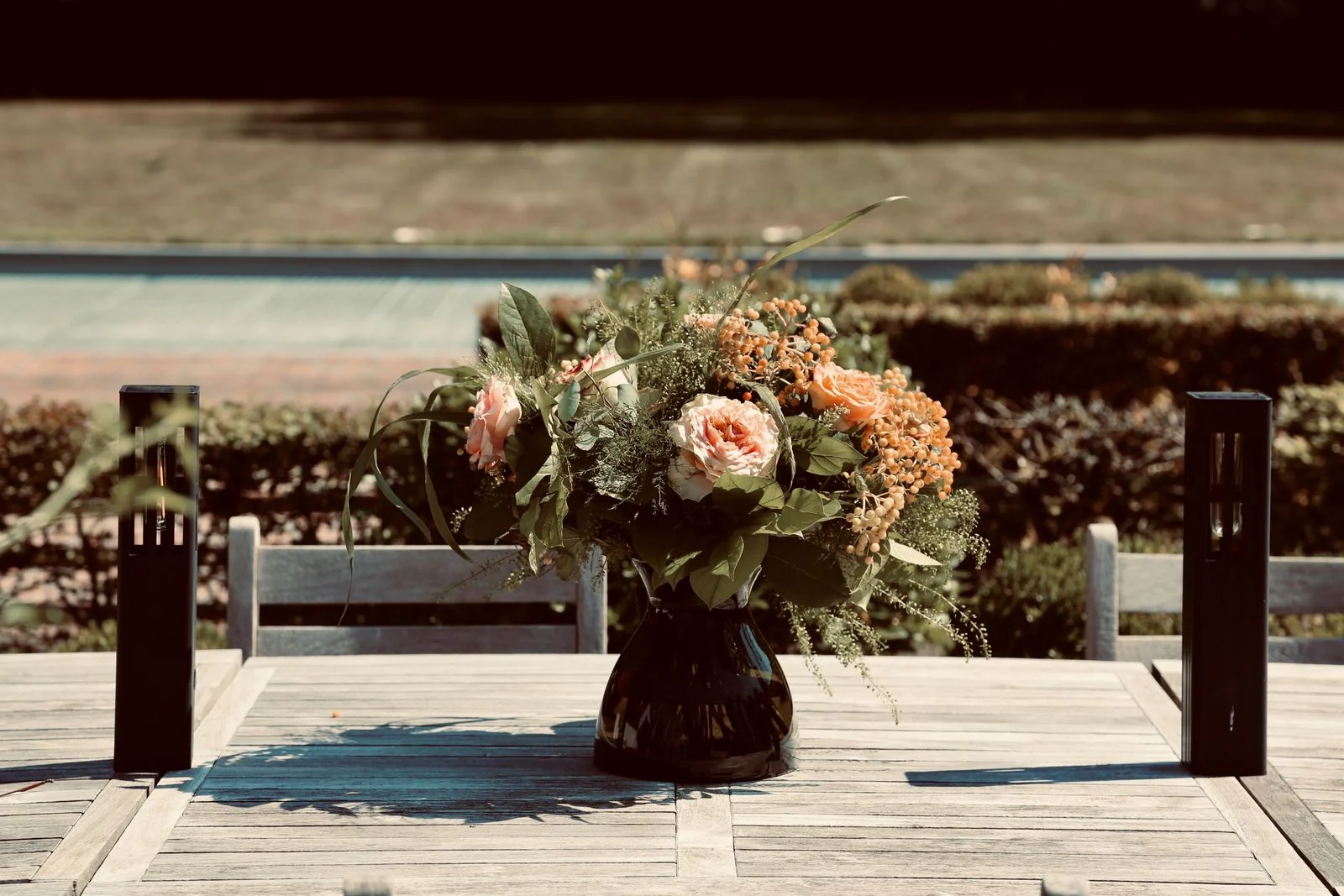
For a dining table, set the empty vase between two occupied seats and check the sightline. An arrangement can be short enough in the center yet still place a sideways stem directly in someone's face. Leave room for water glasses and serving dishes. On a side table, a taller or more spreading shape may have space to develop.
Do not put an unknown plant into food, onto a cake, or where a child or pet may chew it. Decorative use does not establish that a plant is edible or safe for a particular household. Keep the arrangement and food service distinct unless the plants and their intended use have been properly identified.
Take care before arranging
University of Minnesota Extension's cut-flower guidance recommends cutting early with sharp tools, placing stems in water promptly, and letting them hydrate before arranging. It also recommends clean containers and removing leaves below the waterline. Those small preparations are worth doing before thinking about the shape of the bouquet.
Wash and rinse the vase, and use fresh water. If using a commercial floral preservative, follow its directions rather than improvising a household mixture. Keep the working container nearby while you cut; a decorative basket can carry the scissors without being the place where thirsty stems wait.
Choose stems for their condition as well as color. The suitable harvest stage varies by flower, so check guidance for the plants you grow. A bouquet assembled from the garden is a good reason to learn the names of a few favorites more precisely.
Let the stems suggest the shape
Begin with the stems that establish the outline. Turn the vessel and look from the side as well as above. Add the more prominent flowers where they can be seen, leaving enough space around them for their individual forms to read.
Repeating a color can connect very different shapes. A pale flower and a similarly colored leaf edge may be enough; every stem does not need to match. If the arrangement feels heavy, remove something before adding another filler. The spaces between stems can be part of its character.
Here is a small exercise: make one arrangement, photograph it, and remove roughly a third of the stems. Study the difference. The fuller version may be right for a sideboard, while the edited one may suit a table for two. Return spare stems to water in a second vessel rather than forcing every cut flower into the same bouquet.
Let the arrangement change
Check the water and the stems regularly, remove material as it fades, and keep the vessel clean. Move the flowers out of harsh sun and away from a heating outlet. Expect different stems to last for different lengths of time; a bouquet can become smaller and still be worth keeping.
Notice which flowers you enjoyed cutting and which left a gap you missed outside. Next season, give the regular vase fillers a small patch of their own, or buy those stems from a grower. The garden need not lose its best view to furnish the table.