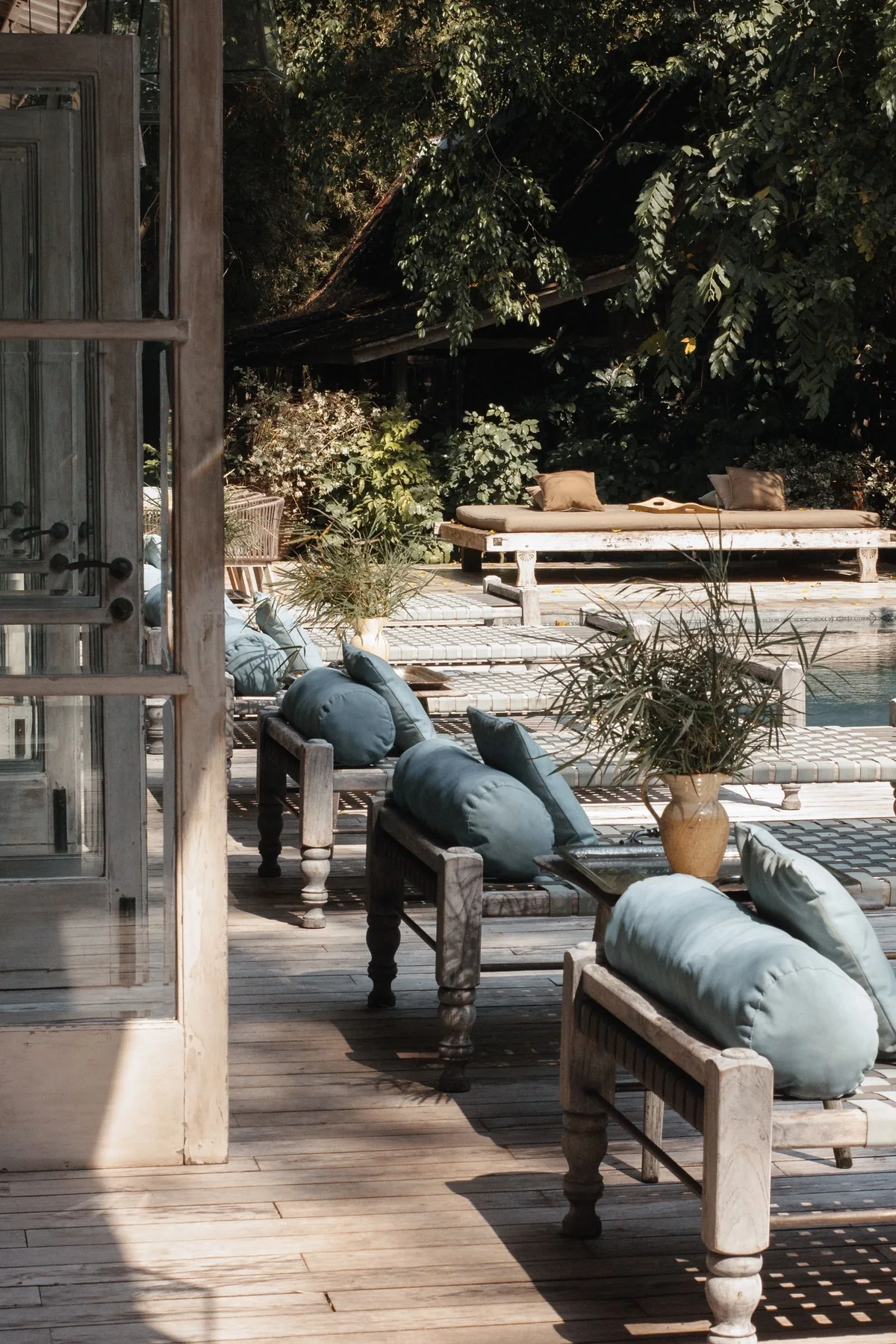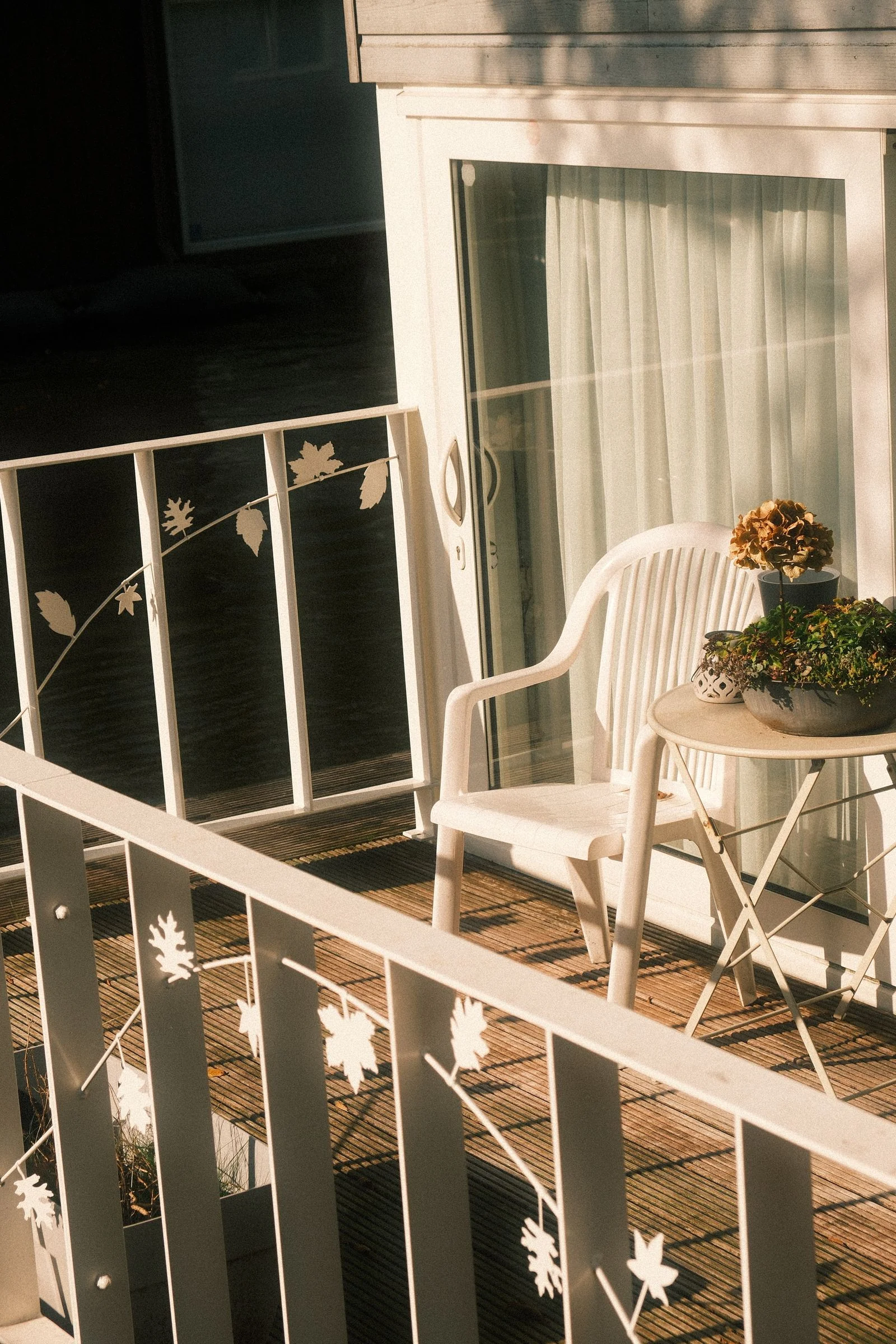
A balcony can be full of plants and still have nowhere to sit. It can also hold a complete furniture set while leaving no room to open the door. The useful starting point is the smallest ordinary scene you want there: one person reading, two people having coffee, or a place to tend a few pots.
Draw that scene before drawing the planting. Include the open door, occupied chairs, and the route back inside. On a small balcony, the unfilled part of the floor is a working part of the room.
Establish what the building can support
Before adding large containers, raised planters, screens, or stored materials, confirm the building's requirements with the owner or manager and obtain qualified advice where needed. Wet growing medium, containers, water, furniture, and people all contribute weight. A neighboring balcony or a photograph cannot establish the capacity of yours.
The Royal Horticultural Society identifies weight and exposure as central constraints for roof and balcony gardens. Its horticultural advice is useful context; structural approval, permitted attachments, and required clear routes belong to the particular building. Do not infer a safe load or a fixing detail from a general garden article.
For a rented home, settle proposed attachments and changes before buying them. A freestanding object still needs to be stable in the actual wind. “Portable” describes how it moves, not whether it can safely remain outside in every condition.
Furnish from the doorway outward
Put the chair in place and sit down before adding pots. Test the route with another person using the door. A folding table may be helpful, but only if there is somewhere to put it when folded and enough space to use it when open.
Choose one main use instead of scaling down every room in a garden. A reading seat and a small surface can feel generous where a miniature dining area, lounge, storage bench, and plant collection would compete. If two people usually share the space, test both seats at the same time; a photograph with chairs tucked in can conceal an unusable arrangement.
Look from indoors as well. A single well-placed plant can frame the view through the door, while a row of tall containers may turn it into a wall. Allow the railing and the space beyond it to remain part of the composition.
Garden for the exposure you have
Observe sun at the hours you are home and at different times of year. Note wind, reflected heat, and any roof or balcony above. RHS guidance points out that an overhang may exclude rain and that exposed containers can dry quickly. The weather report does not describe the moisture inside each pot.
Start with a small number of plants whose light, mature size, and water requirements suit those observations. Keep enough room to reach the growing medium, remove a spent plant, and inspect drainage. A plant squeezed behind furniture is difficult to care for even if its foliage looks attractive from the room.
Use container-growing guidance appropriate to the plant. University of Maryland Extension notes that container plants often need closer monitoring than plants in the ground. Check the medium before watering rather than treating every pot alike. A deep pot and a shallow bowl can behave very differently in the same afternoon sun.
Give the water somewhere acceptable to go
Work out how water reaches the balcony and where drainage goes before planting. Keep building drains accessible and follow the building's drainage arrangements. Do not let runoff become a problem for the neighbor below or use a watertight outer vessel that leaves roots standing in water.
Rehearse one complete watering trip with the empty containers in place. Can you reach every pot without leaning over the railing or stepping onto furniture? Where will the watering can be stored? A setup that requires awkward reaching will become harder as plants grow.
Finish with a weather routine. Know which lightweight objects need to come inside and have a secure, approved arrangement for everything that remains. Keep the route to the door usable during that changeover.
Live with the first arrangement before adding more. Keep the plant you enjoy tending, the chair you choose to sit in, and the patch of floor that makes both accessible. A small outdoor room gains character through repeated use, not through filling every edge.