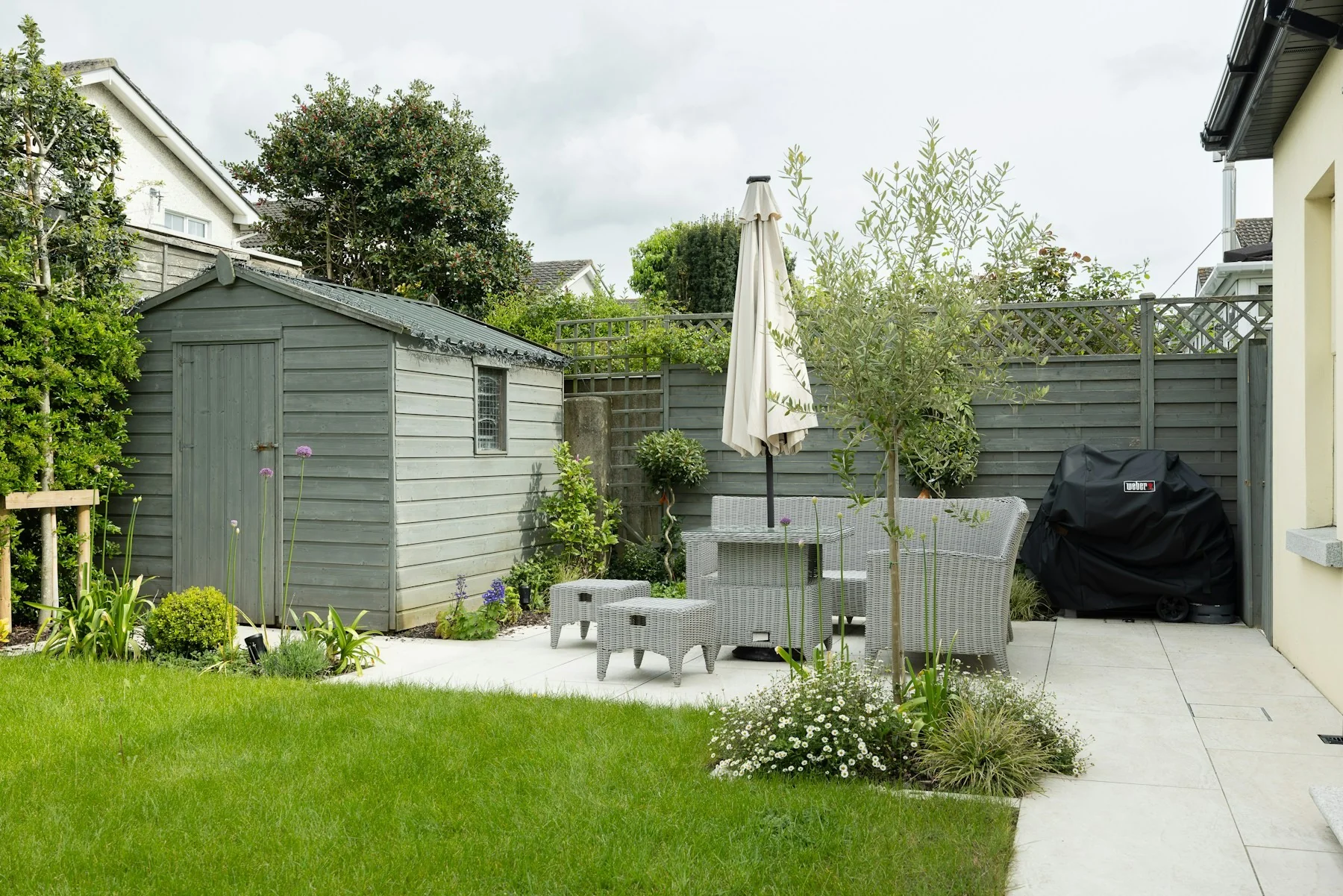
Start with Tuesday, not the garden party. Where would you drink a coffee, read for twenty minutes, or eat dinner when nobody is visiting? A backyard that supports those small routines has a reason to be used throughout the week. The grand occasion can still have its place; it simply does not need to dictate every square foot.
Turn a wish into a usable brief
Consider an illustrative household that eats outside twice a week, reads outdoors on weekends, and hosts a larger group occasionally. A large permanent dining set may answer the rarest event while making the everyday room awkward. A smaller table, a genuinely comfortable reading seat, and a place to store extra chairs may describe the household more accurately.
Write each wish with a frequency and a condition. “Dinner outside on weeknights, close to the kitchen” is easier to design for than “an entertaining area.” “Reading in afternoon shade, with a place for a cup” identifies a different need from “a lounge.” These are examples of a planning method, not a prescribed furniture list.
| Routine | What the space must provide | What can stay flexible |
|---|---|---|
| Weeknight meal | Convenient serving route and comfortable seats | Extra places for occasional guests |
| Quiet reading | Supportive chair, useful shade, small landing surface | The chair's seasonal position |
| Larger gathering | Clear circulation and places for drinks | Additional chairs and tables |
Resolve the wish that competes with another
A quiet reading corner and a lively cooking area may both matter, but placing them beside each other can weaken one of them. Mark which activities happen together and which need separation. Put the reading chair where its outlook and sound suit a longer stay; keep the serving route near the meal.
Give each priority a reason for its position. If two important uses compete for the same patch of afternoon shade, test them with movable furniture before committing to either. This makes the brief a set of decisions about daily life, rather than a list of things to buy.
Decide what success will feel like
Choose two ordinary moments that should become easier after the work. Use them when reviewing each plan: does the proposal shorten the trip with dinner, protect the desired quiet seat, or simplify setup? A feature that contributes to neither may still be enjoyable, but it should earn its space explicitly.