At a glance
- The work
- Front-entry planting and stone path
- The palette
- Flagstone, boulders, aggregate and metal edging
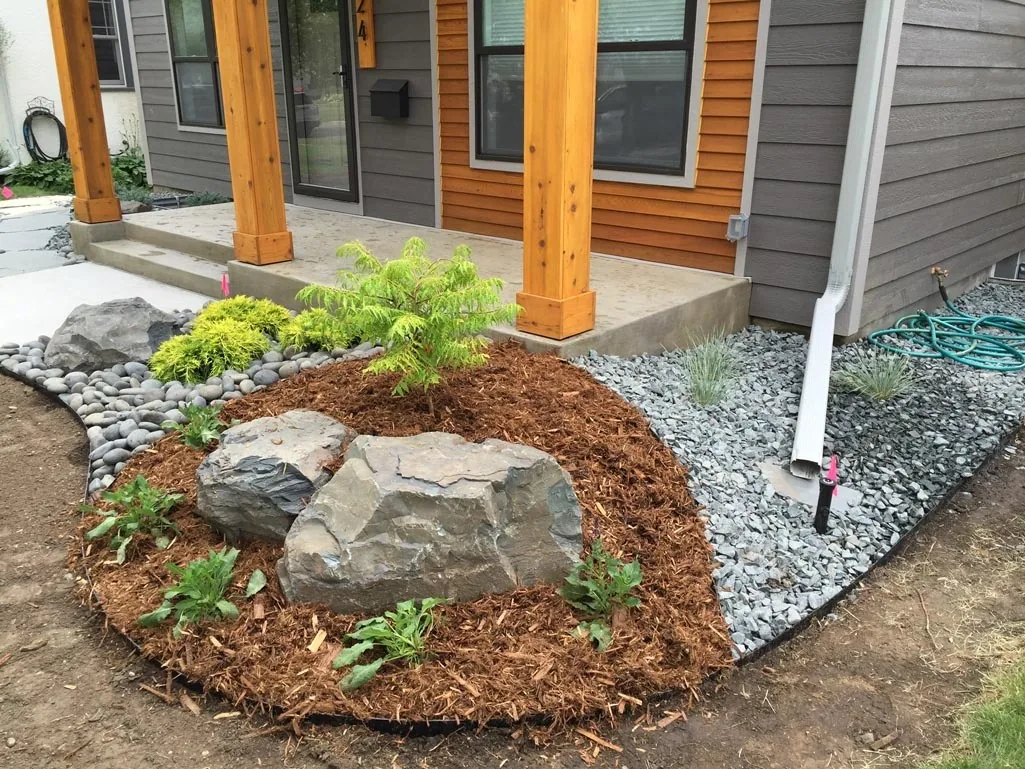
The timber porch posts are the first strong verticals at this entrance. Below them, broad stones form a path through a bed of smaller aggregate, with a large boulder and low planting giving the foreground its shape. Urban Landworks keeps the composition close to the house rather than carrying a large formal bed into the lawn.
The two views reveal how several materials can occupy a small area without making the route confusing. Flat stones identify where to walk. The boulder is visibly outside that route, and the curved bed edge describes the change from garden to lawn.
A useful contrast in scale
The aggregate is fine enough to read as a background surface. Against it, the larger stones have weight and individuality. Low shrubs and perennials sit between those harder elements, leaving room for the gray siding and warm timber posts to remain visible.
This is not a garden dependent on a mass of flowers. Its structure comes from the difference between the straight building lines, the irregular stones and the curved edge of the bed. Plant growth can soften those relationships over time without being asked to conceal the entire arrangement.
Leaving the entrance legible
The important space is the opening between the porch and the yard. The stones lead toward it, while the planting stays low beside the approach. Even with several textures in view, the destination remains obvious.
A front garden at this scale does not need an elaborate focal point. The porch already provides one. The landscape's contribution is to bring the ground around it into focus: a route, a few substantial stones and enough planted space to make the threshold feel part of the garden.
At home
Keep the walking route clear, then use the space beside it for texture and planting rather than a larger expanse of paving.