At a glance
- The work
- Residential metal fence and garden gate
- The palette
- Dark metal fencing
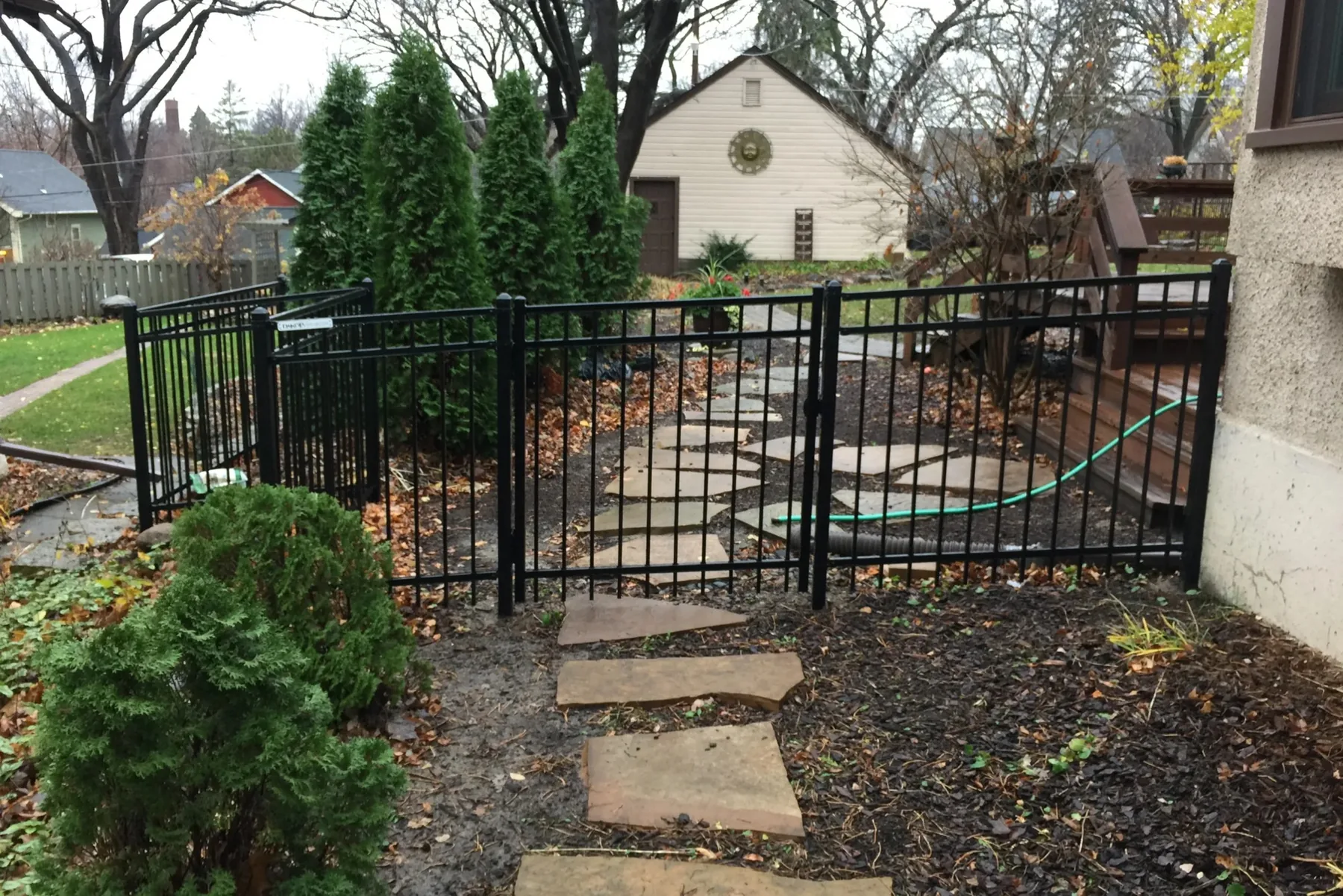
The stepping stones lead directly to a dark metal gate. Through it, the path and planting continue, so the boundary is clear without ending the view. In this residential installation from Dakota Unlimited, the fence is part of the garden's structure rather than a screen placed in front of it.
The vertical pickets repeat across the gate and adjoining panels. A darker horizontal line gives the top a consistent rhythm, while the planting and tree trunks beyond remain visible between the bars.
Making an entrance without an arch
The gate does not need a large overhead structure to announce itself. The approach path does much of that work, directing attention to the opening. Its stepping stones are more informal than the metalwork, which keeps the entrance from feeling overly ceremonial.
At the side, stone edging and established planting soften the base of the fence. The dark finish recedes against the foliage, particularly where the view is shaded. From farther away, the eye can register the garden beyond before noticing each individual picket.
Choosing visibility deliberately
An open fence and a solid privacy screen answer different needs. This example makes visibility part of the design: the gate defines a transition, but the landscape remains connected on both sides.
That choice is especially relevant where a boundary crosses an existing garden route. The path can still promise somewhere to go, even when the gate is closed. The result is a small piece of construction with a clear role—an entrance that marks the edge without turning its back on the planting.
At home
A gate can mark a boundary clearly while still allowing the path and planting on the other side to remain visible.