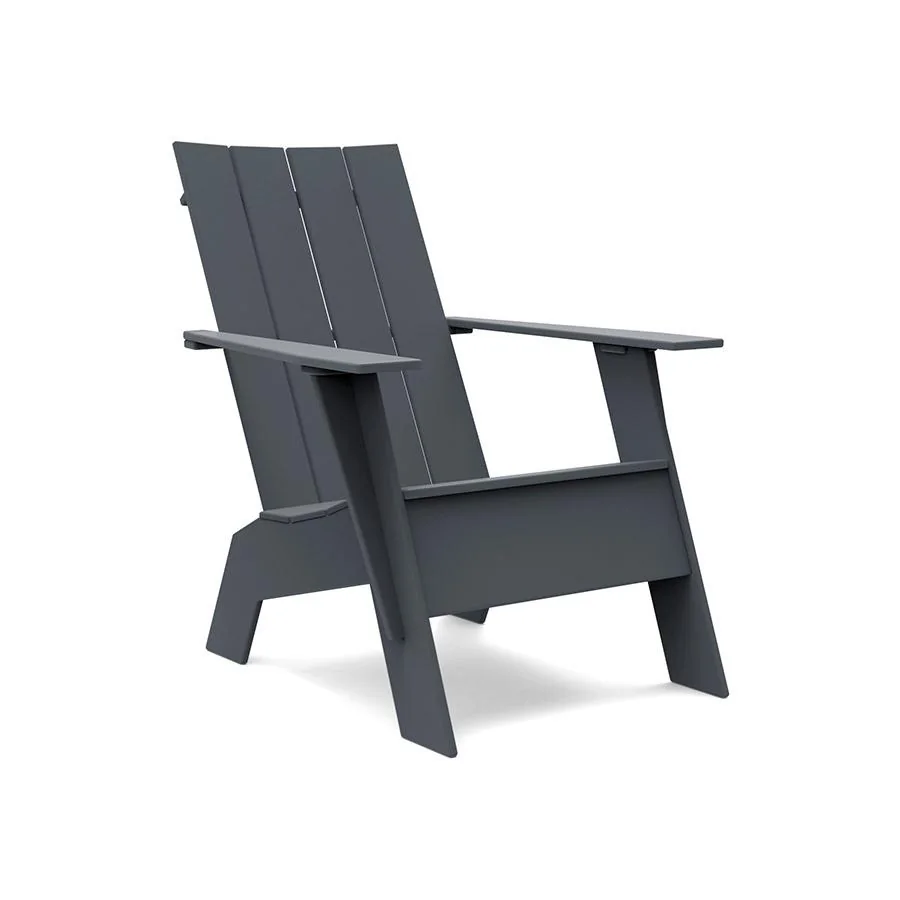
The Tall version of Loll's Flat Adirondack raises the familiar low garden-chair form. Loll lists a 15.5-inch seat height and an approximate weight of 55 pounds for the four-slat model. Those details suggest a chair to position deliberately, rather than an occasional seat to carry out for every gathering.
Try the movement into and out of the chair
Seat height is a useful specification, but it does not establish comfort for every person. The recline, arm position, and relationship between the seat and the user's legs matter too. Sit in the exact model if possible, including the ordinary movement of standing up.
Decide whether this is primarily a reading chair, a conversation seat, or a place to watch the garden. A relaxed posture can suit a long stay while being less convenient for eating at a conventional table. Match the surrounding furniture to the activity rather than to the silhouette alone.
Give each seat a reachable surface
Draw the chair's full footprint and arm width, then place a side table where a person can set down a cup without leaning across the neighboring seat. If two chairs face a view, try a slight angle toward each other so conversation does not require turning away from the backrest.
Leave the route behind the chairs intact. A compact-looking pair can occupy a substantial area once a table and comfortable access are included. Test the grouping on the actual ground before treating it as a finishing accessory.
Decide how often it will move
Loll identifies the chair material as HDPE. Follow its current care instructions for the complete product, including hardware. Weight may affect the handling routine, but it is not a wind rating or an assurance of stability in every setting.
Compare the Tall Adirondack with a lighter or folding chair if the patio changes use frequently. If it will stay in one position, spend more of the trial on the outlook, the reach to a side table, and comfort over a realistic reading break. The handling and sitting tests may lead to different choices; decide which matters most in this particular spot.
Compose the view at seated height
A high-backed chair can make a strong silhouette from the house even when no one is using it. Place a temporary outline where the chair will stand and check whether it interrupts a planted view or gives the terrace a welcome sense of occupation. A pair need not be perfectly parallel; a slight turn can open conversation while preserving the outlook.
Consider the surface beneath the chairs as part of that composition. Deep loose gravel, narrow paving joints, and a level deck create different experiences when people shift their weight or move the furniture. Ask about the manufacturer's recommended placement and handling. The chair's substantial weight does not compensate for an unsuitable or uneven setting.
Compare the Tall and low forms in use
A taller seat may make getting up easier for some people, but a measurement alone cannot establish that. Test the chair with the intended user, including the reach to the armrests and whether the feet rest comfortably. If adding an ottoman, try the complete arrangement rather than choosing it from the collection photograph.
The low lounge silhouette belongs to a slower activity than upright dining. Keep a reachable table for a cup or book and leave enough room to stand without stepping around it. If the same patch of patio must become a dinner space every weekend, compare more mobile furniture. The Tall Adirondack makes the strongest case as a deliberate resting place with a durable everyday position in the garden.