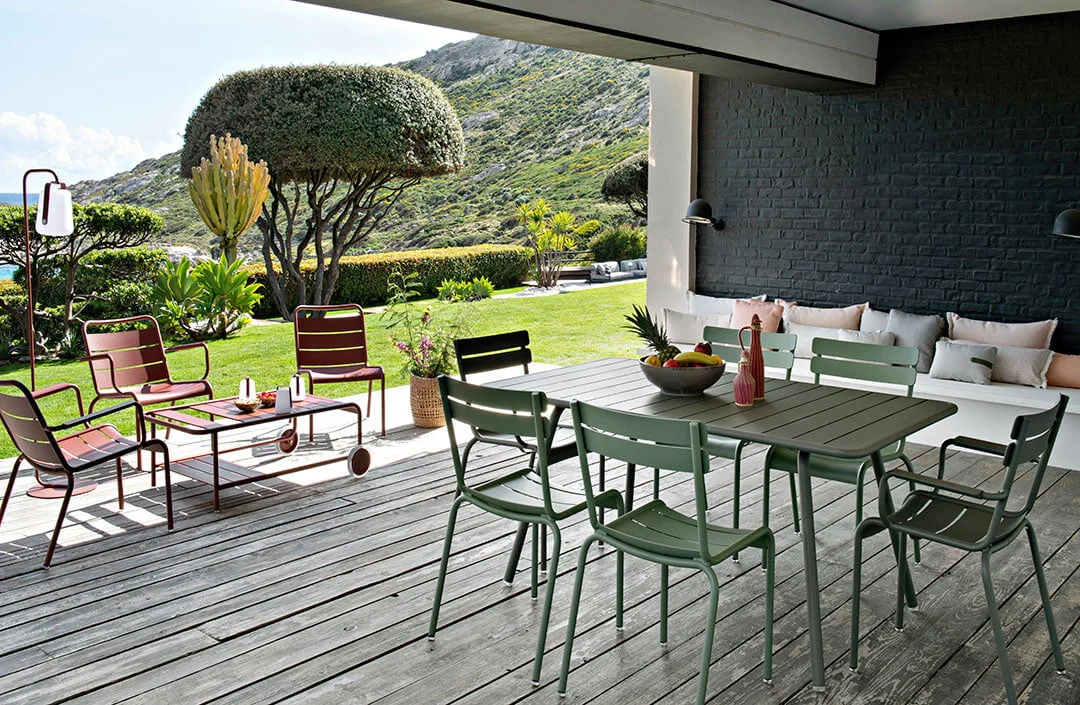
Some outdoor furniture gives a garden structure even when nobody is sitting in it. Fermob's Luxembourg collection does this with curved metal slats, open space between components, and a broad color palette. The collection includes dining, lounge, and bench forms; choosing the right one is a question of posture and proportion before it is a question of color.
Pick the kind of sitting
A chair for a long lunch and a chair for reading under a tree are not interchangeable simply because they share a family resemblance. Establish the activity first. Then compare the seat, back, arm position, and relationship with the table or side surface.
For a dining arrangement, try the chosen armchair at a table of the proposed height and construction. Check whether the arms can move beneath the top and whether the chair can be pulled back without meeting a planter. For lounging, spend time in the seat rather than judging comfort from its silhouette.
Use color across the room
Luxembourg's aluminum construction and colored finish can make a small grouping feel lighter than a collection of deep upholstered pieces. The color still occupies a substantial part of the view. Put finish samples beside paving, house trim, and the dominant foliage before choosing several separate shades.
One repeated color can unify furniture acquired over time. Two related colors can separate a dining area from a quieter seat without fragmenting the garden. A mixed palette works best when it is edited as a whole; the availability of many finishes is an invitation to choose deliberately, not to use them all.
Consider the empty garden
Look at the furniture from the house with the table cleared. Does the grouping still give the terrace a coherent center? The open slatted form can allow planting and paving to remain visible, but a crowded arrangement can still feel busy.
A bench may be the right answer along a wall, yet it changes how people enter and leave their seats. A group of individual chairs allows more adjustment. Draw both alternatives, including the route past them, before choosing the more photogenic composition.
Check the exact piece, not the collection name
The collection contains different forms, dimensions, and handling requirements. Confirm the product code, finish, stacking information where applicable, protective feet, and care instructions for the pieces being ordered. Do not assume that every chair or bench in a family shares the same practical details.
If the furniture will be stored seasonally, measure the storage route as well as the final space. A light-looking chair still needs to pass through a door and sit somewhere without damaging its finish. Keep any recommended protection and replacement foot information with the order.
When a cushion is—and is not—the answer
Try the chosen chair without accessories first. If a cushion is needed for the way you sit, include its thickness, storage, drying, and replacement in the comparison. A thin pad can alter the seat relationship with a table; it is not merely a color accent.
Try the exact seat you plan to buy. A lounge chair and a dining chair can share a color and a family resemblance while holding the body quite differently. Once the posture suits you, use the color chart to connect the pieces you need; there is no obligation to buy a matching set.