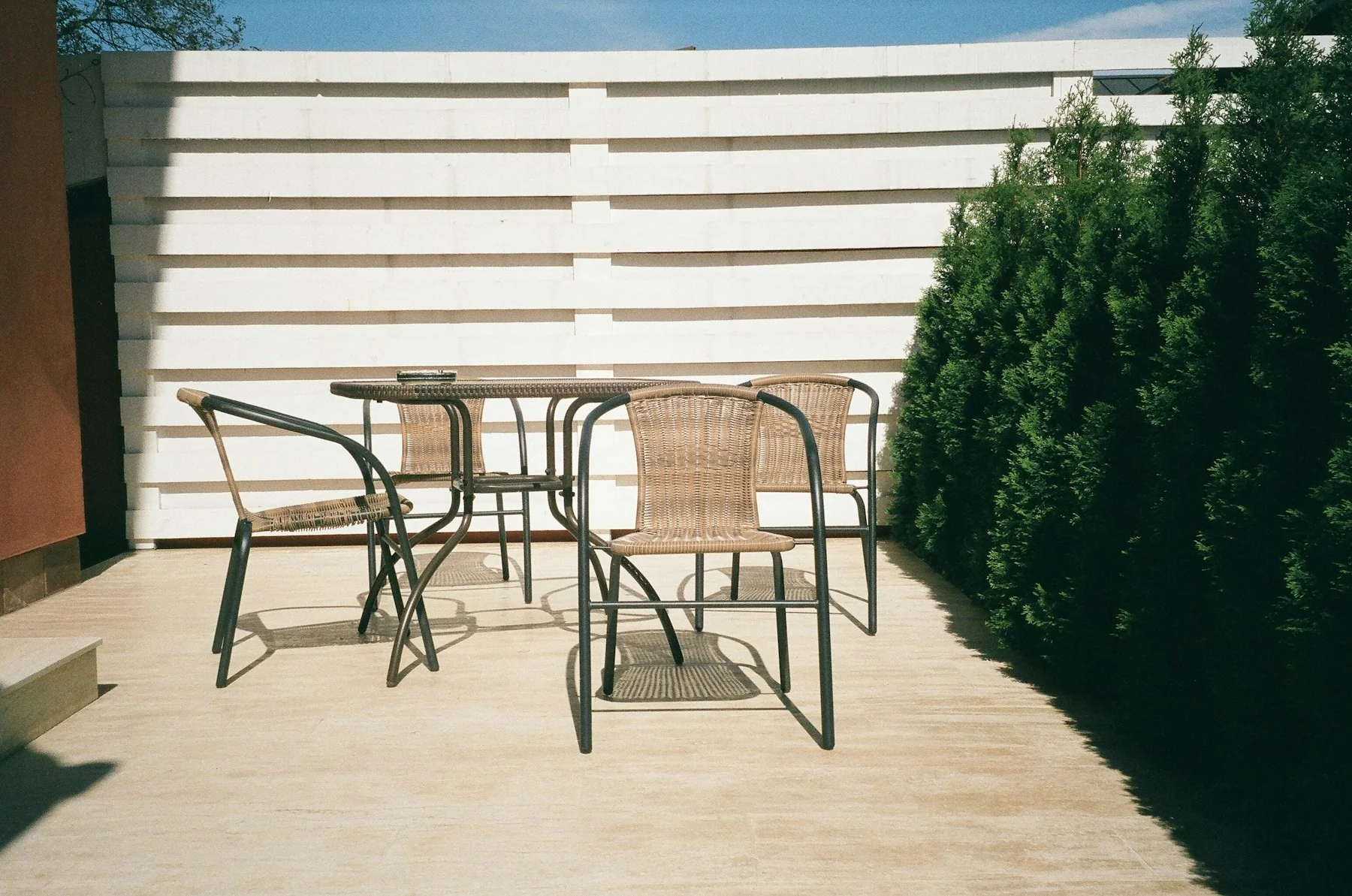
A porch belongs to two places at once. Its roof and floor are part of the house, while its light, sounds, and view belong to the garden. Furnishing it well means allowing both relationships to remain visible.
The temptation is to treat the floor as an empty room waiting for a complete furniture set. A more revealing beginning is to notice what already happens there: arriving with shopping, waiting for someone, taking off muddy shoes, or sitting for a few minutes before going indoors. A porch can become a favorite room by making those ordinary pauses more comfortable.
Keep the doorway in the picture
Open the door fully and follow the route from the house to the steps or garden. Include the space needed to carry a bag or tray, and consider the people who use the route. This passage is part of the room. It should still work when someone is sitting down.
On a narrow porch, two chairs along the house may leave a clearer route than a sofa facing outward. On a deeper one, a small grouping at the end can make a destination without occupying the entrance. Neither arrangement can be chosen from the floor area alone: doors, posts, railings, and the direction of the view change the answer.
Try the arrangement with furniture you can move. Sit in every position, then ask someone to pass through. Notice whether a person entering the house has to interrupt a conversation or squeeze between a chair and a table. That is a layout problem worth solving before choosing upholstery.
Furnish the ordinary visit
Give each seat somewhere to put a glass or book. A modest side table can do more for daily use than a large central table that is difficult to reach. If the porch is used for reading, test the chair with the book you would actually bring out; a seat that feels good for a conversation may offer the wrong support for an hour of reading.
Then consider what must be carried outside every time. If enjoying the porch requires retrieving cushions from upstairs, moving a planter, and finding a lamp, the room asks for a small production before every visit. Decide which objects can safely remain in their intended exposure and which need nearby storage.
A roof does not make an open porch an indoor room. Check furniture, textiles, and electrical products for their actual intended use. Wind-driven rain, dampness, and sun can reach sheltered surfaces. Follow the maker's care and installation requirements rather than assuming that a covered position resolves them.
Give the room a view, and a little privacy
The most attractive direction is not always straight ahead. A chair angled toward a tree may also turn the sitter away from a neighbor's window. A planter can soften a post without creating a continuous barrier. Look from seated eye level before adding screening.
Keep the view from indoors in mind too. The backs of the porch chairs may become the foreground of the kitchen or living-room window. An open frame, a lower back, or a different position can make the garden easier to see. Check those possibilities with the actual furniture; product photographs seldom show the relationship from both sides of the glass.
For a useful documented example, Mom's Design Build's Urban Oasis project in St. Paul began with a homeowner's memory of a childhood porch. The firm's account describes a fireplace positioned to improve the view from the kitchen. That specific decision is a reminder that the porch can serve the household even when nobody is sitting in it.
Know when to stop furnishing
Leave some floor and some view unclaimed. An empty patch can accommodate a visiting chair, an open door, or a person stopping to talk. It also lets the architecture remain legible: the line of the railing, the ceiling, and the rhythm of the posts.
Spend an ordinary week with the simplest workable arrangement. Keep the chair that gets used, the table that is within reach, and the route that remains clear. Add the next object only when you can name what is missing. The porch earns its place through those repeated, easy visits.