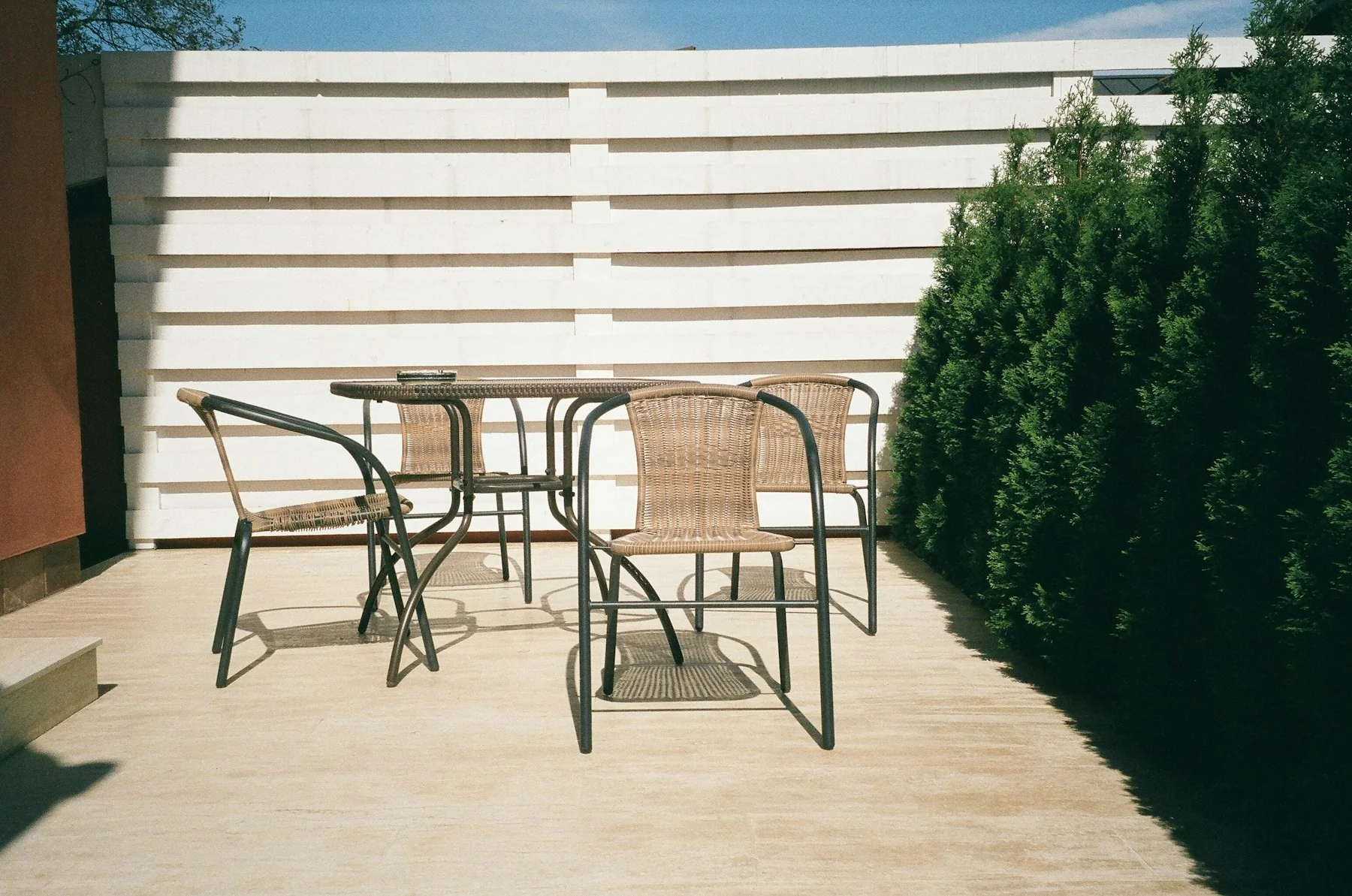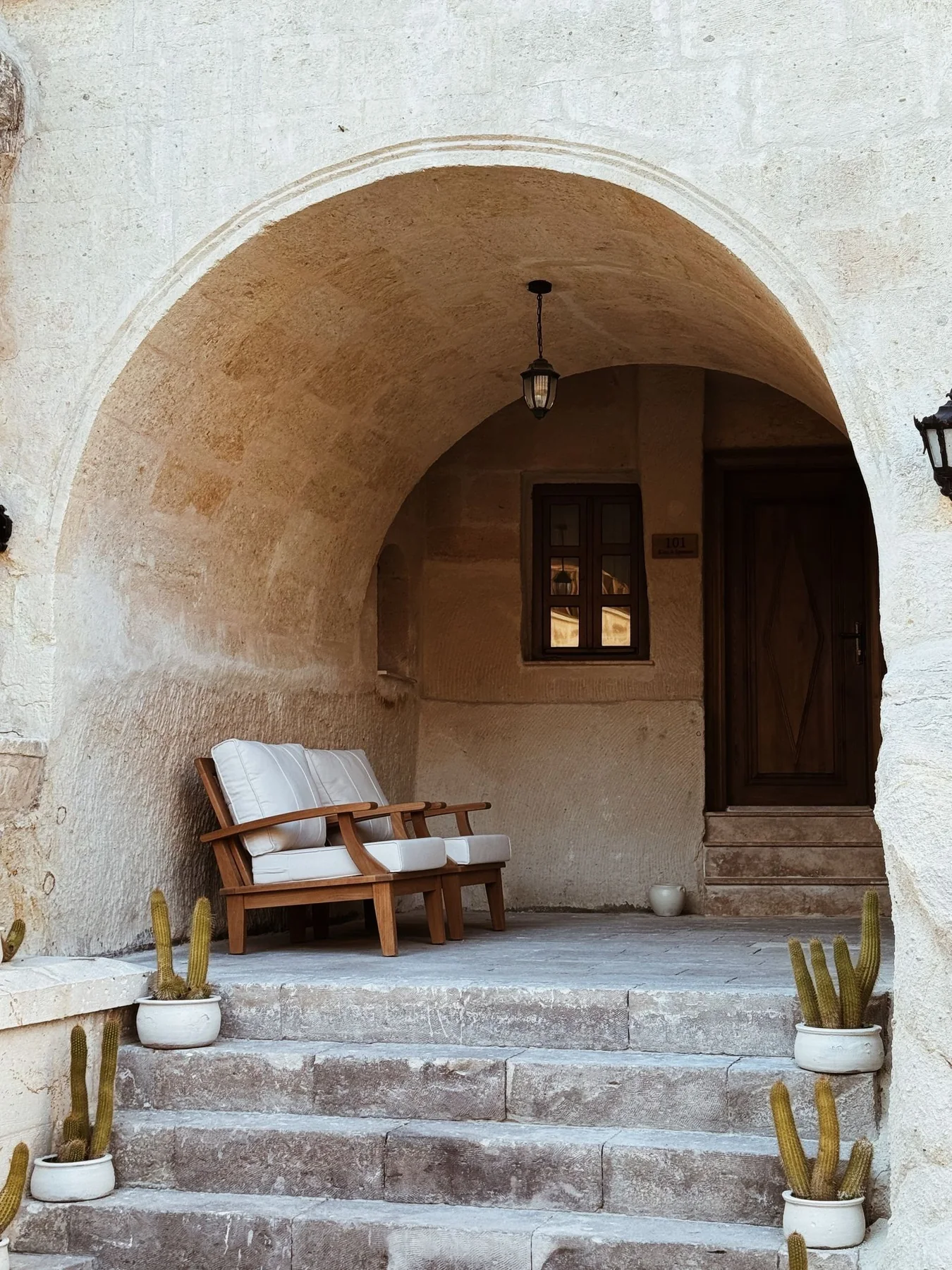
In a courtyard, the wall across from your chair is always part of the room. So are the door behind you and the opening toward the sky. Start with those close relationships. A single well-placed focal point may do more for the space than several features competing for attention.
Compose the room from a seat
Choose the principal sitting position and identify the floor, the main wall, the opening, and the focal element in that view. If each demands equal attention, simplify one layer. A courtyard's enclosure makes its surfaces unusually present; there is less distant scenery to absorb visual competition.
An illustrative dining courtyard might use a quiet wall behind the table, planting at one corner, and a gate that reveals the route onward. The center stays useful because the strongest details are placed where they support the room rather than occupy it.
Review all the doors before placing the focal point
A small courtyard may connect several rooms or provide the route to a gate. Mark every opening, its swing, and the usual journeys between them. Reserve a place to sit that remains comfortable when someone else passes through.
Place the strongest visual feature where it can be enjoyed without occupying that route. If a water element is proposed, consider its sound from the surrounding rooms as well as from the outdoor chair. The enclosure concentrates those everyday relationships. A composed courtyard gives circulation, sitting, and the view distinct roles even when they share a modest footprint.
Give the opening a deliberate role
A doorway or gate can frame a glimpse, admit light, or direct arrival. Review it both open and closed. Furniture should not make the most useful opening feel accidental or require guests to squeeze past the main chair.
- Test the occupied table or lounge before adding perimeter features.
- Review neighboring sightlines, including upper windows.
- Keep service and care access part of any water or planted feature.
- Decide which surface can remain visually quiet.
Remove one container, occasional chair, or proposed ornament from the sketch. If the focal point becomes clearer and the room more usable, the simpler version may already be complete.