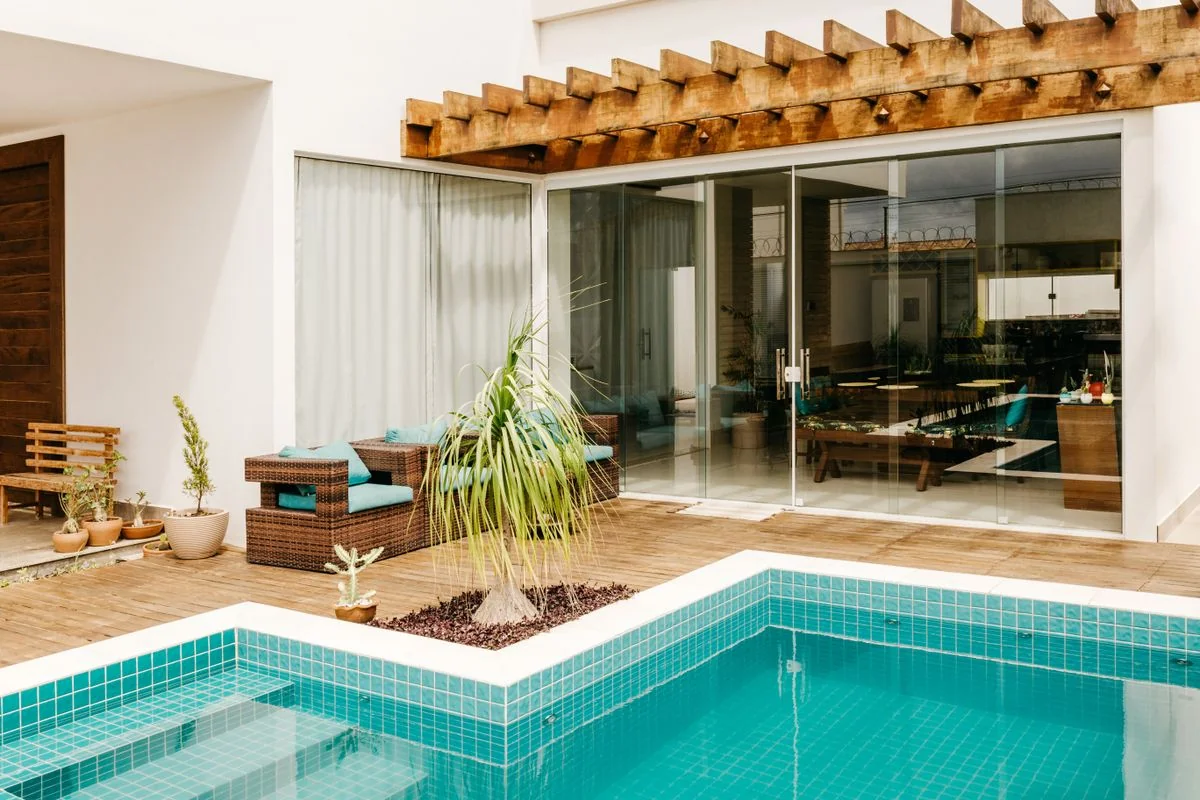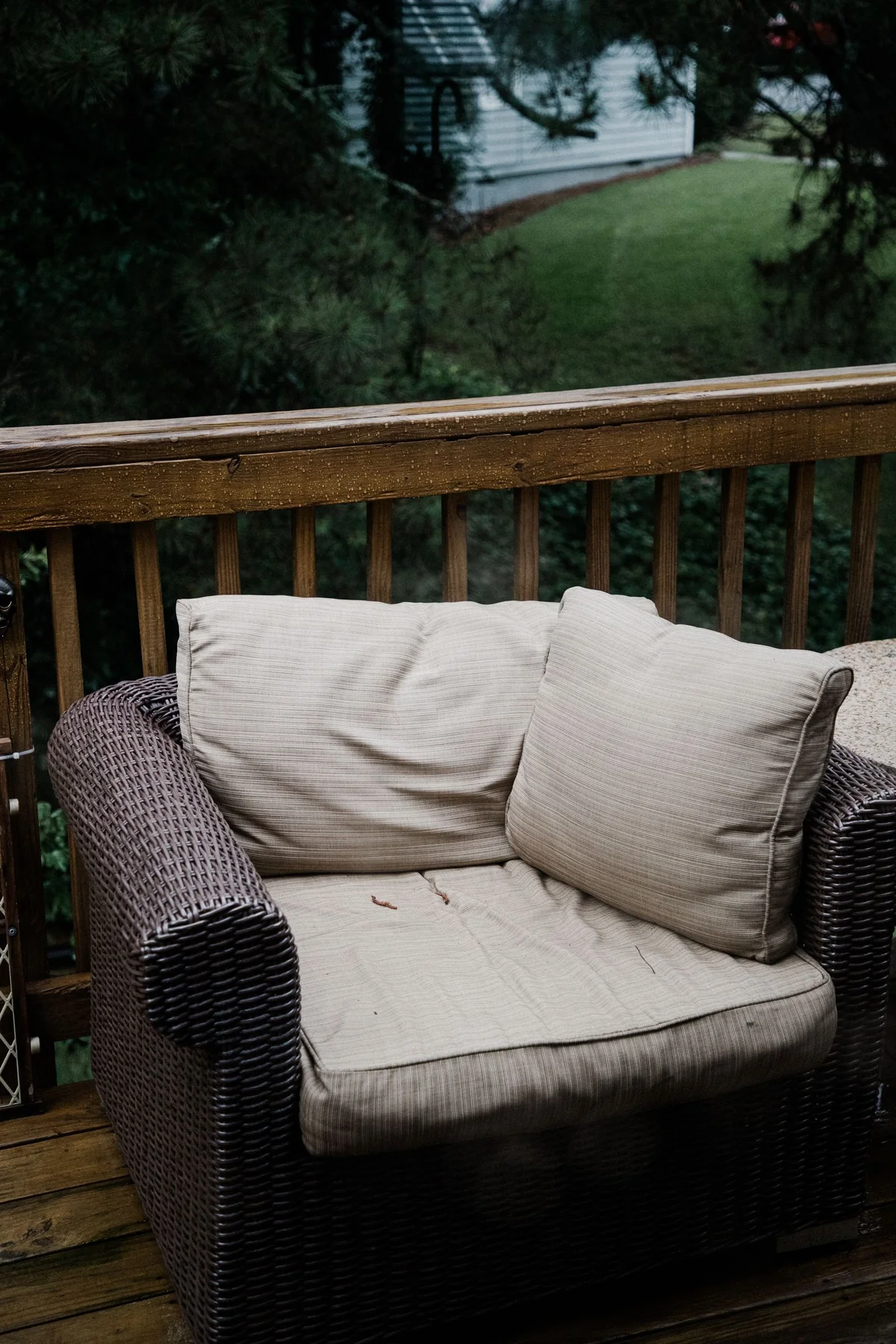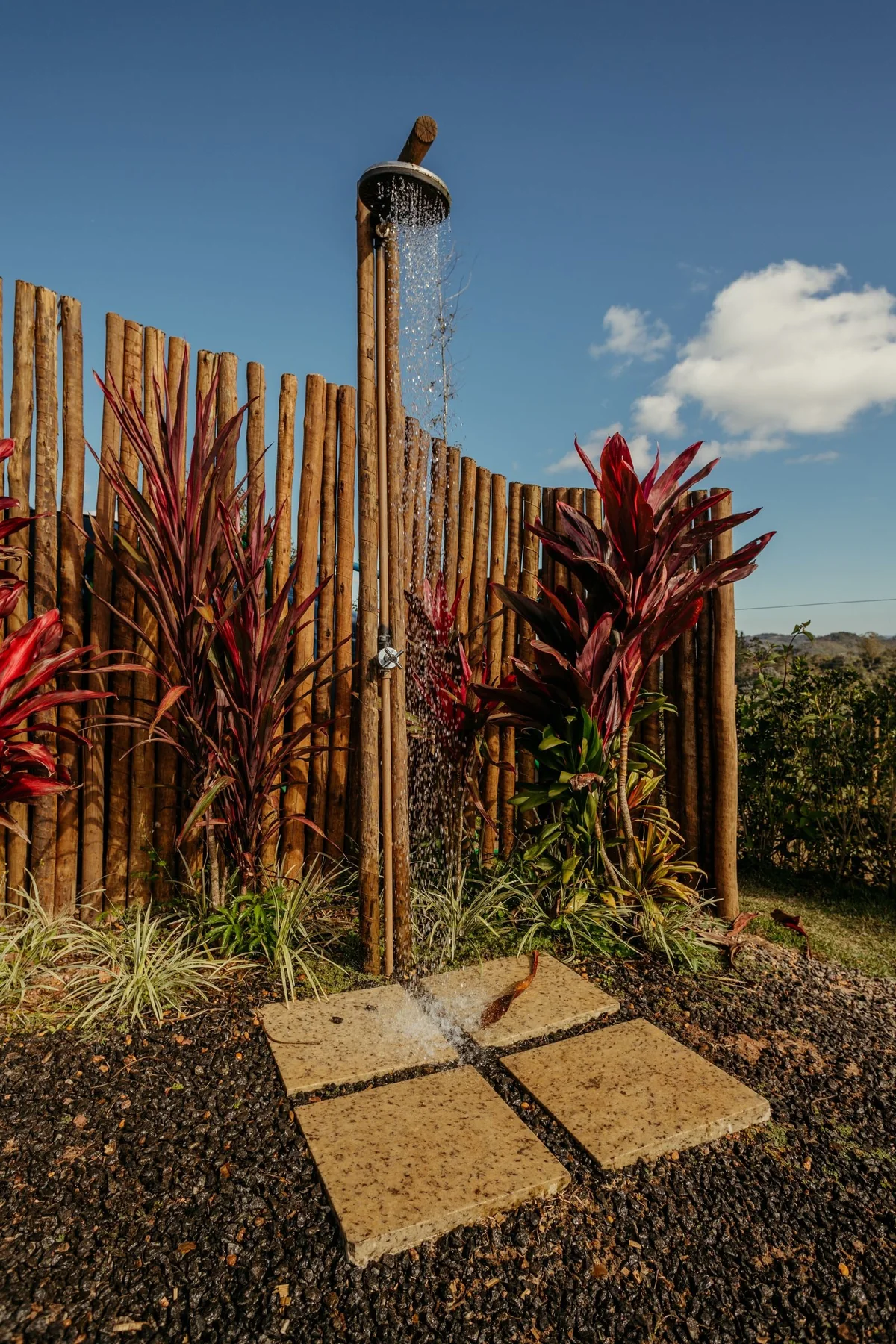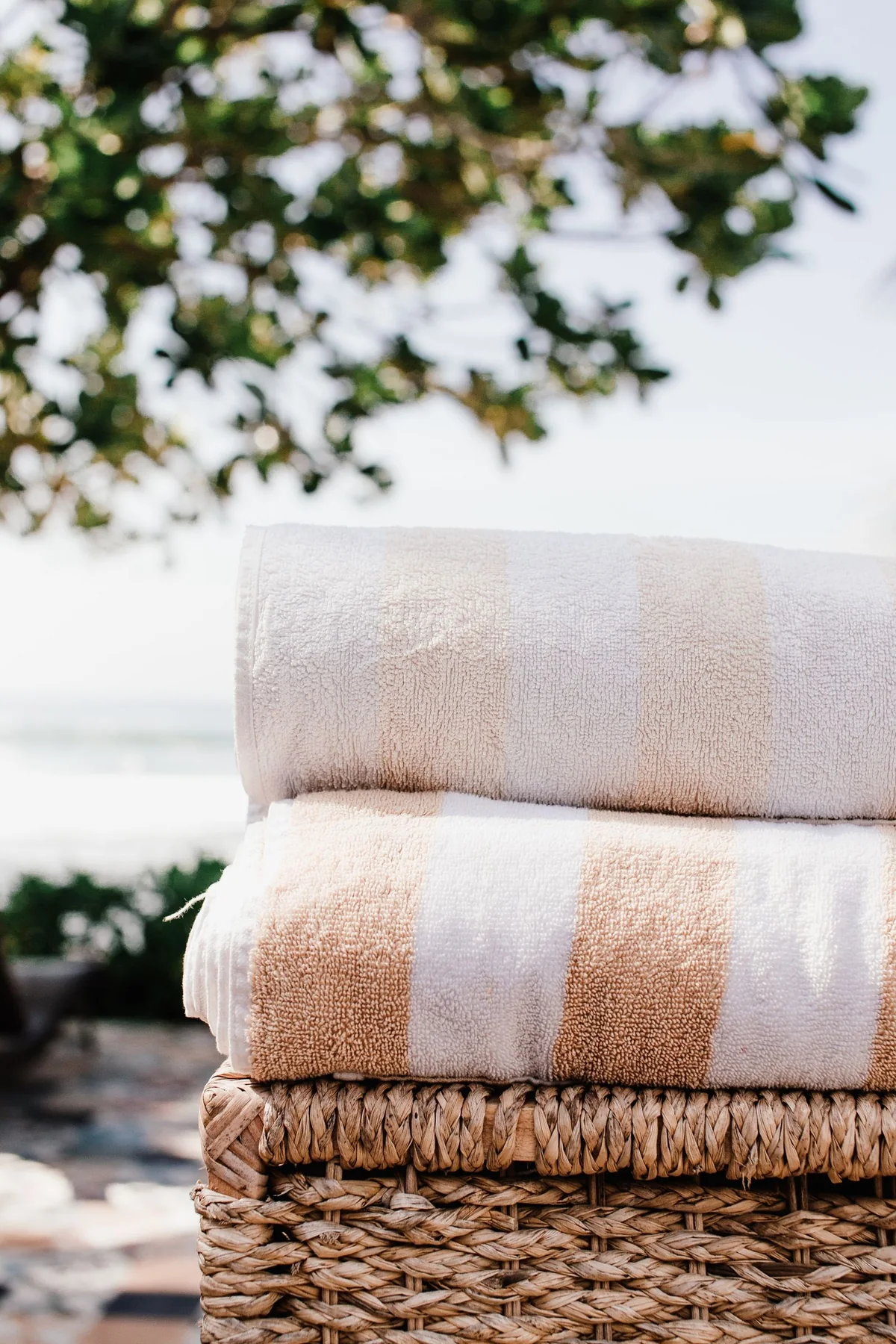
A towel on every chair leaves nowhere to sit. Toys under the table create another obstacle. Poolside storage begins with these ordinary belongings: where they arrive, what gets wet, and where they go when swimming ends. Give them places before they take over the furniture.
Separate arrival from the wet return
Clean towels belong on the way into the pool setting; damp belongings need a different end-of-use routine. Combining them in one closed box can make the storage tidy-looking while leaving the practical problem unresolved. Decide how wet items will be removed and dried.
Keep leisure storage distinct from chemicals and operational equipment, following the pool professional's and manufacturers' requirements. Furniture placement must also preserve the intended operation of barriers, gates, and service routes.
Check storage against the barrier plan
A bench or tall storage box beside a pool fence can change how that barrier functions. The barrier needs to remain unclimbable and its gate able to operate properly, consistent with Pool Safely’s safety guidance. Ask the pool professional to review the actual furniture and storage positions as part of the completed layout.
Keep chemicals in their designated storage under the relevant product and professional guidance, separate from towels and toys. The leisure cabinet should solve the ordinary belongings problem without borrowing space reserved for equipment or safety access. Review it with its doors or lid open and with the route back to the house in use.
Measure the contents before the cabinet
| Contents | Planning question |
|---|---|
| Clean towels | Can they remain dry and easy to reach? |
| Damp belongings | Where do they go next for drying or washing? |
| Toys | Can the frequently used items be returned easily? |
| Cushions | Does the selected storage suit their moisture and ventilation needs? |
| Service supplies | What separate storage is specified by the responsible professional? |
Review the end of a swim
Imagine everyone leaving the water at once. Identify where footwear, towels, toys, and bags land. If they all end up on the lounge chairs, the storage is either inconvenient or too undifferentiated.
Store what the household actually uses. Rotating or removing rarely used toys may solve the problem more effectively than adding a larger cabinet beside the pool.