OUTDOOR LIVING, THOUGHTFULLY CONSIDERED
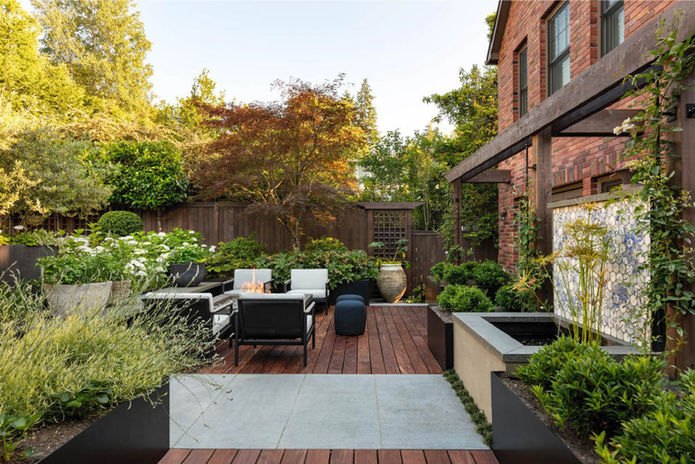
A builder’s eye for the garden.
In Seattle, Scot Eckley brings landscape design and construction together, with a particular interest in what materials can do.
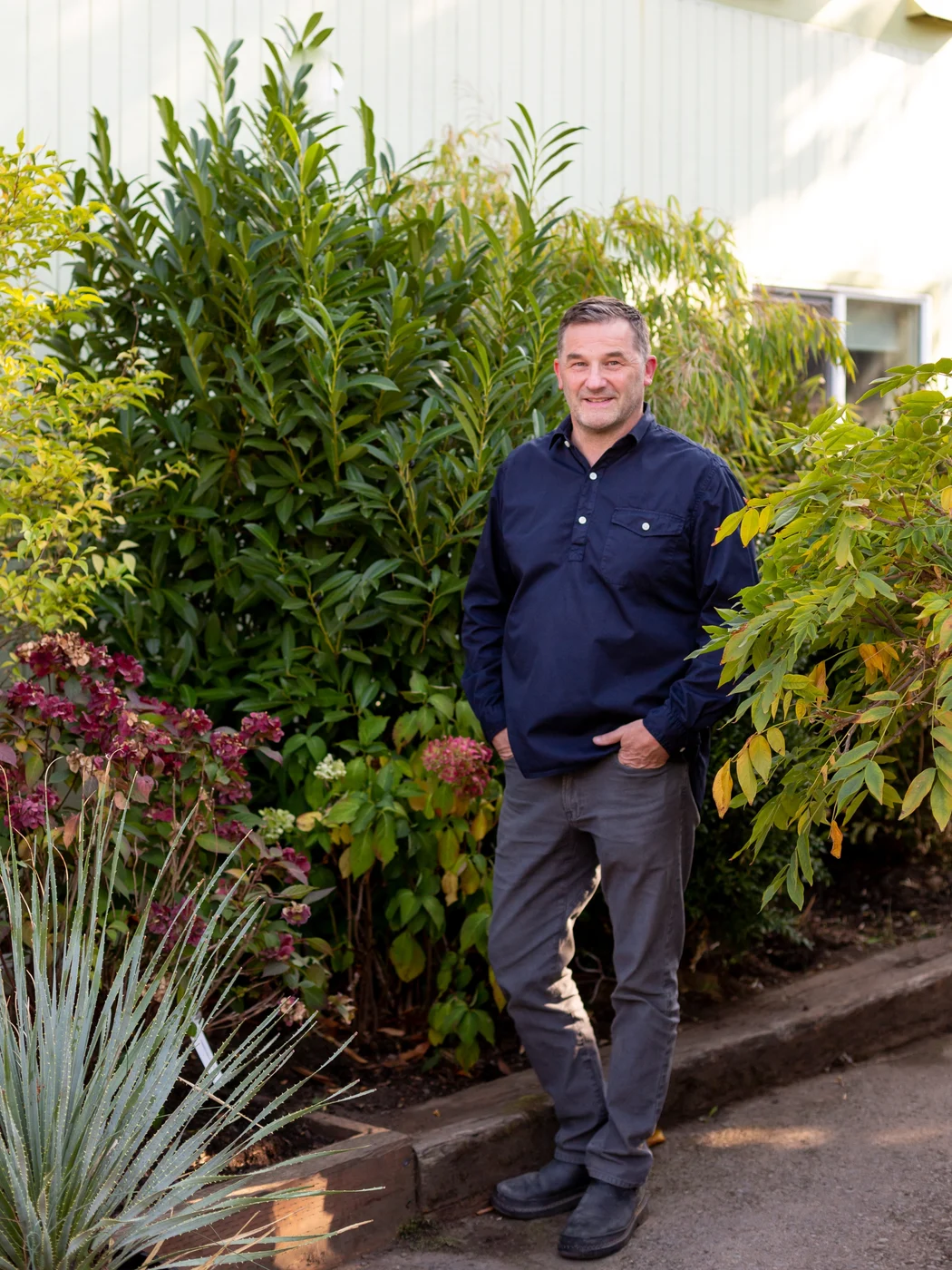
Scot Eckley
Before starting his own company in 1999, Scot Eckley worked in landscape construction. He also studied English literature and landscape architecture at the University of Washington, and continued his design and construction education in Boston, Cuernavaca and Rome.
That combination of making and designing runs through his Seattle practice. A garden is a spatial composition, but it is also an assembly of things that must be built: concrete edges, timber screens, steps, walls and planting beds.
The beginning
Eckley’s company developed around residential landscape design, construction and care. It also builds gardens designed by other landscape architects. That experience puts the practical questions of construction close to the design process.
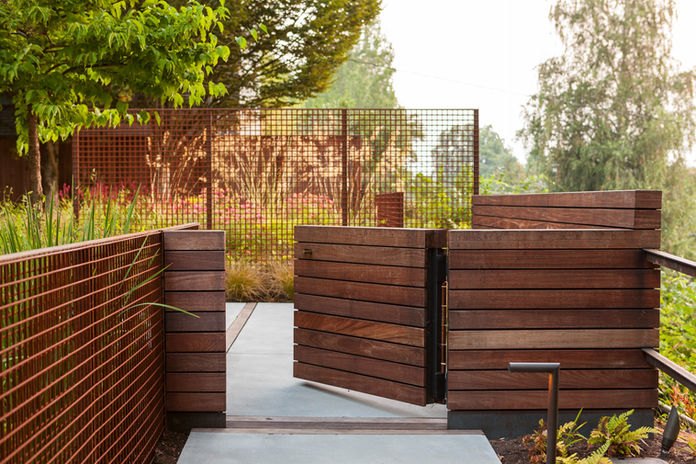
Materials are a recurring interest. The company’s work shows steel used to define planting, timber providing both privacy and seating, and hard surfaces arranged to do more than get a visitor from one point to another.
Around the design table
The firm’s outline of its process begins with a conversation about how a client wants to spend time outdoors, followed by a discussion of the project, budget and design work. Concept designs and construction details are reviewed before the building schedule is developed. Continuing garden care follows for clients who want it.
This gives the homeowner several different kinds of decisions to make. First comes the life the garden should support. Later come the dimensions, materials and details that will allow that life to happen.
A project that tells the story
The Bento courtyard is a good place to see the approach at close range. The route to the front door passes a low fire feature, an ipe lounging deck and raised steel planters. Concrete, cedar and steel create different degrees of enclosure, while planting keeps the composition from becoming a collection of hard partitions.
Arrival and outdoor living occupy the same small setting. The courtyard does not need to be reserved for guests or for a particular occasion; it is part of coming home.
Finding their kind of work
City gardens make these decisions especially visible. In a limited footprint, an entrance may need to offer privacy, a place to pause and an unobstructed route to the house. Dividing those functions too rigidly can make the space feel smaller.
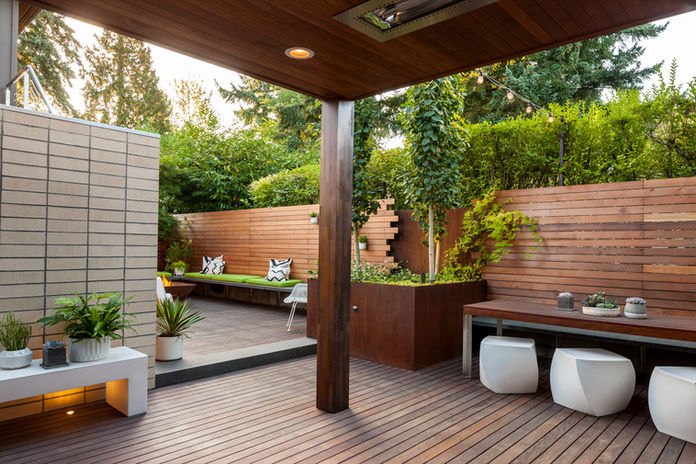
Eckley’s portfolio includes gardens where built elements do several jobs. The edge of a deck can define a room; a screen can shelter a seat; raised planting can mark a threshold without creating a solid wall. The useful detail is often the point where two functions meet.
Away from the plans
Away from projects, Eckley enjoys cycling, traveling with his wife and life in Seattle’s Maple Leaf neighborhood. His business is based nearby in north Seattle. The city-garden setting in much of the portfolio is also part of his everyday surroundings.