OUTDOOR LIVING, THOUGHTFULLY CONSIDERED
A garden for the rest of the year.
Bob and Robbi Hursthouse built a Chicago-area practice around outdoor life—and made room for life away from work, too.
Bob & Robbi Hursthouse
Bob and Robbi Hursthouse founded the residential landscape practice that carries their name. Based in the Chicago area, the company combines landscape architecture, construction and maintenance. Its projects often begin with a close look at the house: how rooms open outside, which materials belong to the architecture and when the family will actually use the garden.
The business has worked in Chicagoland since 1990. Across its portfolio, the relationship between a home and its outdoor rooms is more revealing than any single feature.


The beginning
When Bob and Robbi started the company, they made a deliberate choice to use a five-day workweek. They wanted a business that left room for family and a life beyond landscaping. The company still includes that decision in its account of how it works.
It is a small organizational detail with a clear point of view. The people who make gardens also need time to enjoy the places and relationships in their own lives.
Around the design table
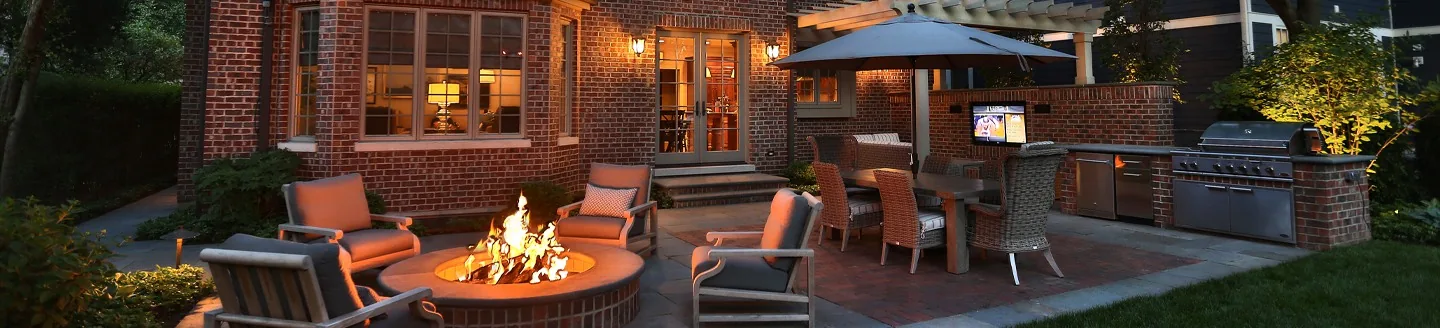
A useful brief describes more than a preferred style. Hursthouse’s Elmhurst project makes that clear: the family spent summers away, so the garden needed to be particularly inviting in spring and fall. Shelter, warmth and a place to watch a game became meaningful parts of the plan.
For homeowners, that is a helpful way to think about the first design conversation. Describe the weeks and months when the garden will earn its keep. A seasonal pattern can change the design more than another photograph of a patio.
A project that tells the story
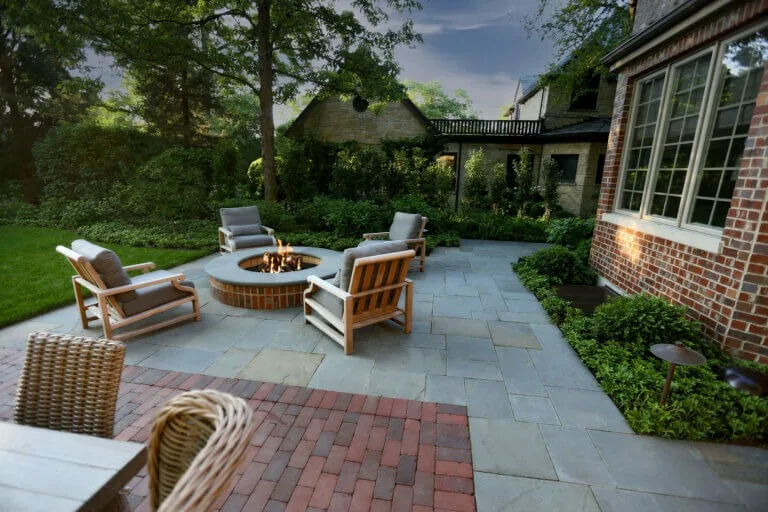
At Inside Out in Elmhurst, bluestone and matching brick connect the new outdoor spaces with the existing home. The work includes dining, cooking, a fire area and an outdoor media space. A cedar pergola and heaters address conditions beyond the height of summer.
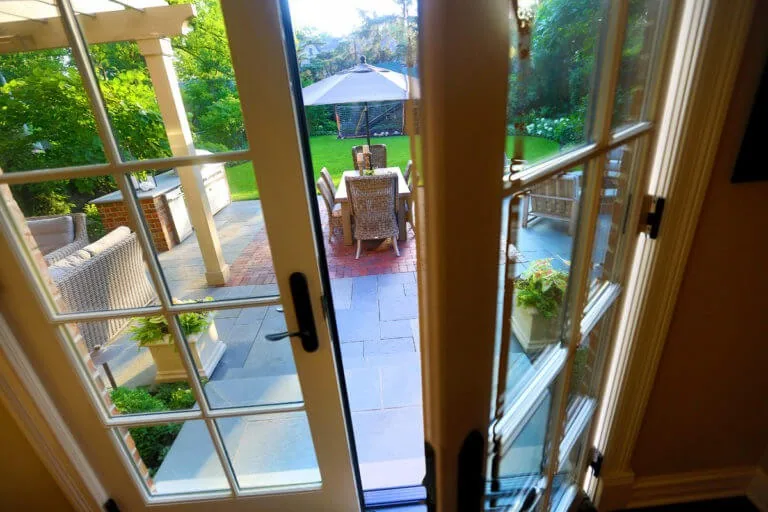
The project also involved the house’s openings, reinforcing the connection between inside and out. Its strongest idea is the one behind the details: design for the household’s real calendar, rather than a generic picture of summer entertaining.
Finding their kind of work
The practice works from design through building and continuing care. It is also part of the NextHaus Alliance, a group bringing architecture, construction, technology and landscape disciplines into coordinated residential projects.
In the gardens, that connection can be quite literal. Brick may continue from a house into an outdoor room. A door may be repositioned to make the terrace easier to reach. A window can frame a planted view that matters just as much from indoors in January as it does from a garden chair in July.
Away from the plans
Hursthouse’s account of its team mentions nicknames, inside jokes and shared traditions. Alongside the founders’ five-day-week decision, those details make the practice feel like a workplace inhabited by people, not simply a name attached to finished gardens.